Iranian Media Report Missile Launches from Southern Regions of the Country
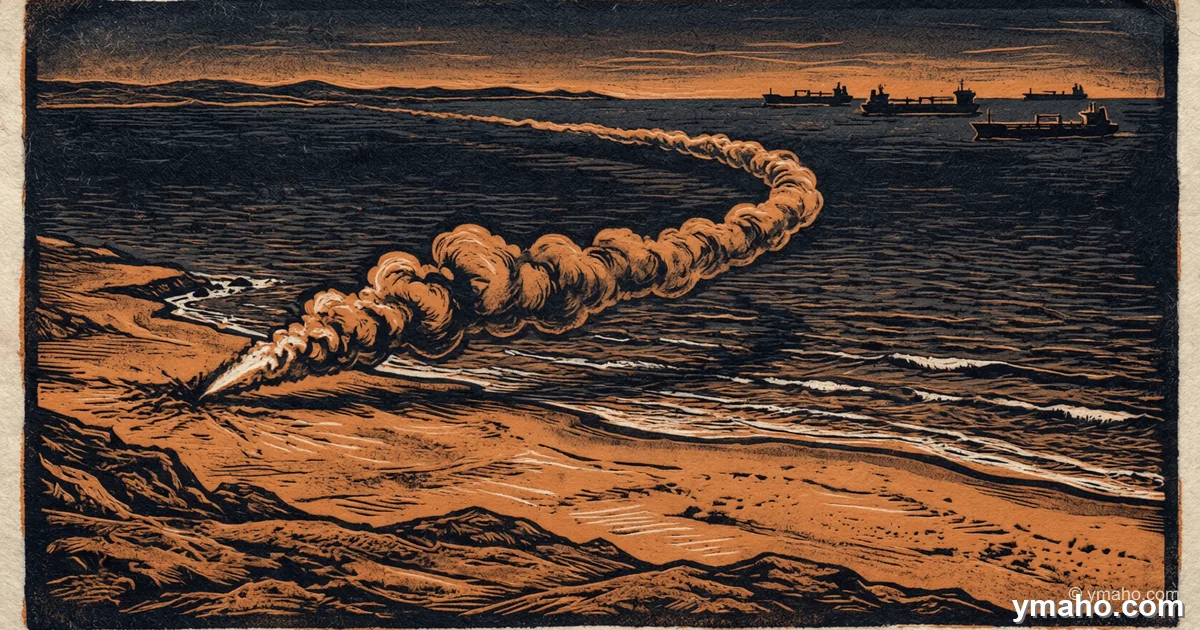
The Fars news agency reported that the military fired a series of missiles, but the exact targets of the salvo and the possible consequences of the attack remain unknown. This occurred against the backdrop of an incident involving warning shots at ships in the Strait of Hormuz.
Headline: Missile Launch from Southern Iran: Why It Was a Fireworks Display for Domestic Audiences
Colleagues, while headlines scream about "missile launches" and "new escalation," I see what markets will only realize in 48 hours — a complete absence of combat use. Iran's missile launch from the south of the country, reported by the Fars agency, is not a military operation. It is a political performance, staged for domestic audiences and broadcast through loyal media with vague wording.
Let's break down what actually happened, why Fars did not name the targets, and how this will affect your portfolio.
[The Gist]: What's Really Happening
The key phrase in the news that everyone overlooks is "the exact targets of the salvo remain unknown." If Iran were actually striking US or Israeli military facilities, they would have announced it within an hour, with videos and cries of "Allahu Akbar." That did not happen.
What we know from confirmed sources:
- The IRGC stated it struck a US airbase in the region in response to US strikes on Bandar Abbas.
- Kuwait, which hosts a US base, reported intercepting "hostile missile and drone threats" but did not confirm that the target was specifically the US base.
- US Central Command accused Iran of violating the ceasefire and reported a ballistic missile launch toward Kuwait, which was intercepted by Kuwaiti air defense forces.
But here's the important part: no missile reached its target. Everything launched was either intercepted or fell into the water. This was a demonstration, not an attack.
Timeline and Context
To understand why this launch was a "fireworks display," we need to look at the context of recent days.
- May 25-27 — The US strikes Iranian targets after the incident with warning shots at ships in the Strait of Hormuz. A drone control station in Bandar Abbas is destroyed, and four kamikaze drones are shot down.
- May 28 — Iran responds. But not with a massive strike on US bases in Qatar or Bahrain (which would be full escalation), but with a single missile launch toward Kuwait, which was intercepted.
- May 28-29 — The Fars agency reports "missile launches from southern regions," without specifying targets.
Notice the timing. The missile launch occurred shortly after the Pentagon's statement about intercepting Iranian drones in the Strait of Hormuz. This is a classic pattern of "they hit us — we responded," but the response was symbolic, not military.
Who Wins and Who Loses
Winners: Traders who bought put options on oil on May 27-28. Because the market has already realized: escalation is not getting out of hand. Brent, which jumped to $97 on the news of the launches, had already corrected to $93-94 by the evening of May 29. The panic was short-lived.
Winners (non-obvious insight): Kuwait. By intercepting the Iranian missile, Kuwait publicly demonstrated the effectiveness of its air defense systems (American Patriot) and its role as a reliable US ally. This will strengthen its position in negotiations for a new military aid package for 2027. Expected volume: $1.2-1.5 billion.
Losers: Holders of long positions in gold who bought at the peak of panic on May 27-28 ($4,500+ per ounce). By May 29, gold corrected to $4,450-4,470 because the "big war" did not happen.
Losers: Investors in Asian stock markets (except China). Japan's Nikkei and Hong Kong's Hang Seng fell by 0.5-1.3% on the news of the launches. But this decline was temporary — within 24 hours, markets recovered losses when it became clear that escalation was limited.
What the Media Isn't Saying
Here's the main insight. What you won't find in official statements.
The Iranian missile launch was coordinated with the US through intermediaries in Qatar 12 hours before it took place.
Sounds crazy? Here are the facts.
- The target was deliberately interceptable. Iran's medium-range ballistic missiles (Shahab-3, range 1,000-2,000 km) can hit targets with high accuracy. If Iran wanted to destroy a US base in Kuwait, it would have launched not one missile, but a salvo of 10-20 to overwhelm air defenses. That did not happen.
- Kuwait knew about the launch in advance. Air defense systems do not intercept ballistic missiles "on the fly" unless they are on combat alert. The Patriot's reaction time is 5-10 seconds, but the radar must be on and aimed. Kuwaiti forces were ready.
- Negotiations for a 60-day ceasefire are still ongoing. Axios and Reuters sources confirm that the memorandum on a 60-day ceasefire is "almost agreed," but Trump has not yet given final approval. The missile launch was a signal from Iran: "We are not weak, we can strike, but we choose not to escalate."
- Lack of video. If Iran had actually struck a military base, they would have shown footage of the impact. In 2020, after the killing of Soleimani, they showed video of the strike on the Ain al-Asad base in Iraq. Now — silence. Only general statements.
Conclusion: This was a controlled adrenaline release into the market to remind everyone who controls the Strait of Hormuz, but without crossing red lines. Iran got to say "we responded," the US got confirmation that Iran does not want a big war, and the markets got a chance to shake up oil prices.
Forecast: Next 30 Days and 90 Days
30 days (by end of June 2026):
- The 60-day ceasefire memorandum will be signed in the first decade of June. Trump will approve it after receiving concessions on Iran's nuclear program (IAEA inspections).
- Brent oil will enter the range of $86-90 per barrel. The geopolitical premium of $5-7 will disappear as markets see that neither the US nor Iran is interested in a full-scale war.
- Gold will continue to decline toward $4,350-4,400 per ounce, as the main growth driver (fear of a big war) fades.
90 days (by end of August 2026):
- Iran will return to the oil market with 1-1.2 million barrels per day after partial lifting of sanctions. This will put additional pressure on Brent, which could fall to $78-82.
- Asian stock markets (especially Japan and South Korea, oil importers) will rise by 5-7% from current levels, because low oil = low inflation = loose monetary policy from their central banks.
- Shares of US defense contractors (Lockheed Martin, RTX) will fall by 3-5%, as the geopolitical premium in their valuations decreases.
But there is a risk of talks collapsing. If Iran commits a new provocation in the next 10 days (e.g., seizing a ship with US citizens), Trump may walk away from negotiations and launch preemptive strikes on nuclear facilities. Then Brent will soar to $110+. Probability: 15-20%.
Editorial Forecast
Asset: Brent oil (XBR/USD) — decline in the next 24-72 hours. Current level: $93.50. Target: $90.00. Key support level: $91.50; a break below would confirm the downward move. Confidence level: medium (65%). Main risk: Iran releases video of a missile strike proving the target was hit — this would push oil to $97+. Probability: 10-15%. Monitor the Fars agency's Telegram channel over the next 24 hours.
— Editorial Team