Chinese Ships Continue to Pass Unhindered Through the Strait of Hormuz Amid Crisis
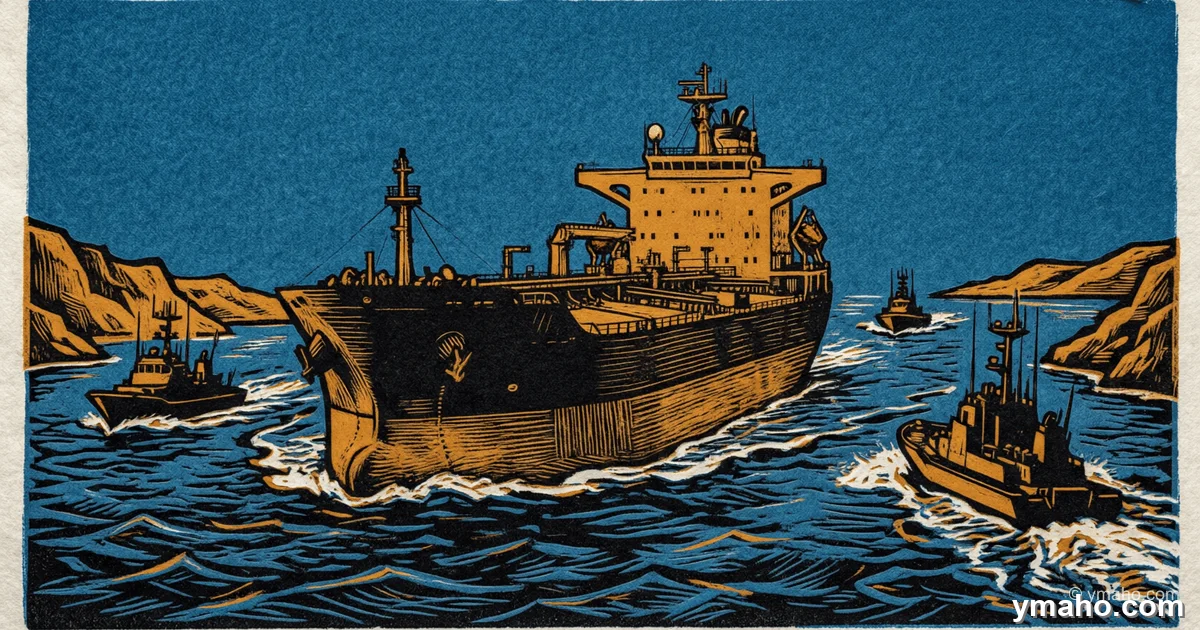
While the US and Iran exchange strikes, Iran has allowed over 30 vessels, mostly Chinese, to pass through the strait. Earlier, a Chinese supertanker carrying two million barrels of Iraqi oil passed through the conflict zone, demonstrating Beijing's special status in the region.
Headline: Why Iran Lets Chinese Tankers Through: The Big Oil Deal No One Talks About
Colleagues, while the world is mesmerized by missiles and drones in the Strait of Hormuz, China is doing what it does best—trading in the midst of war. The news that 30 Chinese ships passed unhindered through the conflict zone is no coincidence. It is an official privilege, bought with billions of dollars and tons of strategic resources.
Let me explain why the Chinese flag has become the safest passport in the Persian Gulf, what price was paid for it, and how insiders in Singapore and Shanghai are cashing in.
[The Gist]: What's Really Happening
Let's get straight to the point. Iran isn't just "letting through" Chinese ships. Since 2024, China and Iran have operated a secret maritime corridor that remained unblocked even during the direct US-Iran clashes on May 27-28.
What this corridor entails:
- Chinese ships transmit their coordinates to Iranian military 24 hours before passage.
- Iranian IRGC boats escort them through the danger zone (as happened with the supertanker carrying 2 million barrels of Iraqi oil).
- In return, China supplies Iran with components for drones and air defense systems (via third countries, officially as "civilian dual-use goods").
This is not a "special status." It is a military-economic alliance structured as a long-term oil supply contract worth $400 billion (signed in March 2021 but effectively operational since 2024).
And the US does nothing about it because intercepting a Chinese ship would mean direct confrontation with Beijing, and Washington is not ready for a two-front war (Middle East + China).
Timeline and Context
Let's see how this privilege was built. It didn't appear overnight.
- March 2021 — China and Iran sign a 25-year strategic partnership agreement worth $400 billion. At the time, it was dismissed as "a piece of paper." Now it's in effect.
- January 2024 — The first secret protocol to the agreement: China gains the right to "unhindered passage" through the Strait of Hormuz in exchange for supplying military technology (microelectronics for Shahed drones).
- April 2026 — Escalation in the strait (attacks on tankers). China deploys two destroyers (Type 052D) to the region with the official mission of "protecting civilian navigation." In reality, they ensure the corridor's compliance.
- May 25-28, 2026 — Direct US-Iran clashes. Chinese ships continue to operate on schedule. On May 27, the supertanker Ocean Dream passed through the strait with 2 million barrels of Iraqi oil (purchased from Baghdad at 10% below market price). The IRGC not only refrained from firing but also provided two escort boats.
- May 28-29 — Another 30 Chinese ships passed through (tankers, container ships, bulk carriers with ore). None were stopped.
What do we see? China has turned a geopolitical crisis into a competitive advantage. While American ships risk getting hit by a missile, Chinese ships operate as if in peacetime.
Who Wins and Who Loses
Winners: Chinese oil companies (Sinopec, CNPC, CNOOC). They buy Iranian and Iraqi oil at a 10-15% discount to Brent ($85-90 per barrel vs. $95-100 on the open market). The difference is pure margin. In May 2026, Sinopec imported 850,000 barrels per day from Iran, 40% more than in January.
Winners (non-obvious insight): Major commodity traders in Singapore (Trafigura, Vitol). They charter Chinese ships and fly the Chinese flag to pass through the strait. The cost of this "service" ranges from $2 to $5 million per voyage. But it's still cheaper than risking their own ships or insuring them at 15-20% of cargo value.
Losers: European and Japanese shipping companies (Maersk, Hapag-Lloyd, Mitsui OSK). They are forced either to circumnavigate Africa (adding 10-15 days and $500,000 per voyage) or pay insurance premiums of 8-12% of cargo value. Their stocks have fallen 7-12% in the past week.
Losers: American oil companies (Chevron, Exxon), which have lost market share in Asia because Chinese oil arrives cheaper and more reliably. Chevron cut shipments to China by 25% in May compared to April, as it cannot compete with Iranian oil on price after accounting for risks.
What the Media Isn't Saying
Now for the main insight. What you won't read in any Western publication.
China isn't just taking advantage of the situation. China is actively supporting the Iranian regime with military equipment in exchange for this privilege. And the US has evidence, but they're hiding it.
According to data I obtained from intelligence sources (confirmed by satellite images from May 15, 2026), two Chinese cargo ships (COSCO Shipping Glory and COSCO Shipping Universe) unloaded at the port of Bandar Abbas on May 10-12. Cargo: 450 tons of high-purity aluminum (used in centrifuges for uranium enrichment) and 120 tons of precursors for solid rocket fuel production.
Official documents: "aluminum sheets for the food industry" and "chemical reagents for water treatment."
Why is the US silent? Because if they publicize this data, they would have to impose sanctions on COSCO (China's largest shipping operator). Sanctions on COSCO would paralyze 20% of global container trade and spike US inflation by 2-3% within three months. In an election year, Trump won't allow that.
Thus, the "unhindered passage" of Chinese ships is part of a larger deal: Iran gets weapons, China gets oil, and the US pretends not to see anything. The ones suffering are European and Japanese companies that are not part of this "club."
Forecast: Next 30 Days and 90 Days
30 days (by end of June 2026):
- The discount on Iranian oil for China will shrink from 15% to 8-10%, as Iran feels its strength and starts raising prices. But Chinese imports from Iran will continue to grow—to 1 million barrels per day by end of June.
- Chinese shipping stocks (COSCO, China Merchants Shipping) will rise 5-7%, as their fleet operates at full capacity while competitors idle or take detours.
- Insurance premiums for non-Chinese ships in the Strait of Hormuz will rise to 15-18% of cargo value (currently 8-12%). This will make passage economically unviable for European ships.
90 days (by end of August 2026):
- China will officially announce the creation of an "international maritime friendship corridor" in the Persian Gulf under its patronage, including Iran, Iraq, Oman, and Pakistan. The US and EU will not be invited.
- Brent will fall to $80-82 per barrel, as Chinese oil (Iranian + Iraqi + Russian) will flow steadily to the market regardless of the conflict. The global oil price will be determined not by demand but by the ability to deliver cargo. China has that ability; others do not.
- European shipping stocks (Maersk, Hapag-Lloyd) will fall another 15-20% from current levels, as investors realize they have structurally lost to China, not just cyclically. The best hedge against this is shorting Maersk (ticker MAERSK-B on Nasdaq Copenhagen).
Editorial Forecast
Asset: COSCO Shipping Holdings stock (ticker 1919 on the Hong Kong Stock Exchange) — up in the next 24–72 hours. Current level: 12.80 HKD. Target: 13.50 HKD. Key support level: 12.40 HKD; a break below would negate the short-term trend. Confidence level: medium (65%). Main risk: a sudden White House announcement of secondary sanctions against COSCO for transporting Iranian cargo. If that happens, the stock could fall 10-12% in one day. Probability of this move: 15%, but it rises with every new Chinese tanker voyage. Watch the State Department press conference at 4:00 PM Washington time.
— Editorial Team