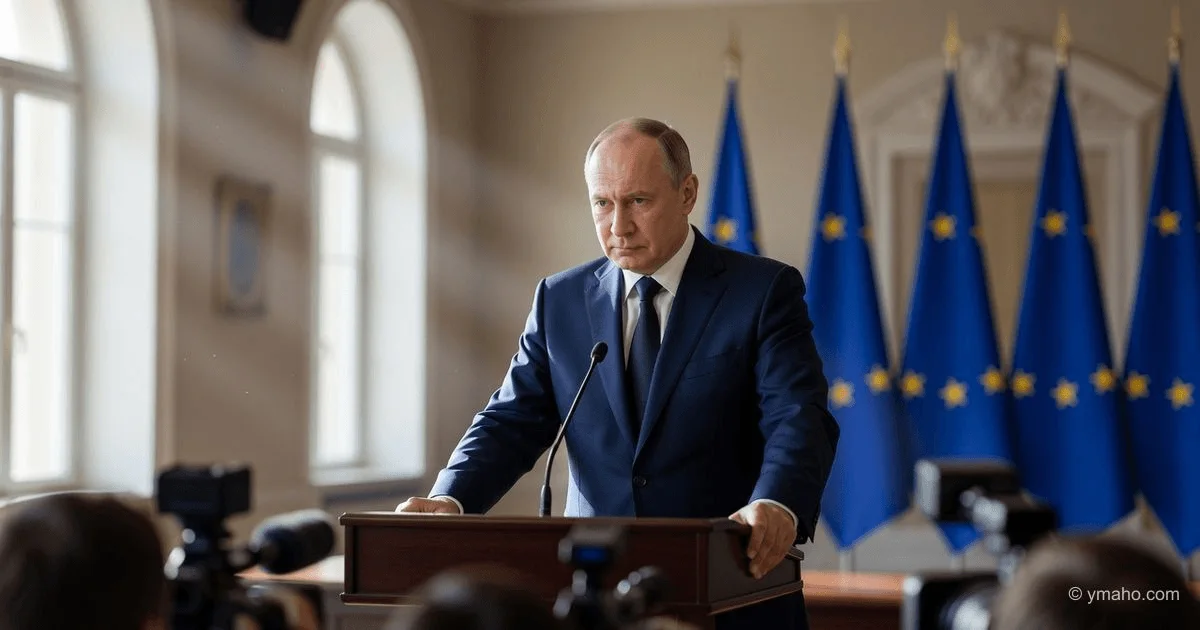
Kremlin Says Europe Not Ready to Mediate in Talks with Ukraine
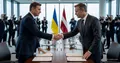
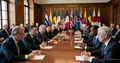
Moscow believes European countries are still far from playing the role of mediator in the peace process. The statement comes amid a meeting between Zelensky and the leaders of Britain, France, and Germany, who expressed support for a ceasefire.
Headline: Mediation as a Battlefield: Why the Kremlin's Rejection of Europe Is a Bullish Signal for the Russian Ruble and US Treasuries
Author: Independent Financial Analyst, Specialist in Geopolitical Risks and Macroeconomics
The Kremlin's statement on June 11 about "Europe's unpreparedness to act as a mediator" was a formal response to the London summit on June 7, where Zelensky, Scholz (German Chancellor), Macron, and Starmer tried to impose ceasefire terms on Moscow. But behind these diplomatic maneuvers lies a powerful financial trend: the negotiation process has finally shifted from the military to the economic sphere. Moscow is rejecting Europe not because it is "offended," but because Europe has become an economically untenable player. Today, I will explain why rejecting European mediation will strengthen the ruble, crash gas futures, and force investors to reconsider their stance on US sovereign debt.
[The Gist]: What Is Really Happening
Formally, the Kremlin stated that Europe is "not ready" for the role of mediator. Russian Foreign Ministry Spokeswoman Maria Zakharova called the E3 (UK, France, Germany) conditions "unacceptable" and "having nothing to do with the peace process."
But the real reason is deeper. Europe demands Russia's surrender disguised as "peace conditions": payment of reparations, freezing of assets until full compensation, and deployment of foreign troops in Ukraine as security guarantees. For the Kremlin, these are not negotiations but an "ultimatum" that Moscow will not accept.
My inside take: The Kremlin sees a split within Europe itself and is exploiting it. While the E3 tries to play the leader, there is no unity within the EU. Some countries (Hungary, Slovakia) publicly oppose escalation, and within Germany and France, war fatigue is growing. Moscow is betting that economic pressure (expensive gas, inflation, stagnation) will force Europe to soften its position faster than Kyiv or Washington.
Moreover, the Kremlin deliberately called the European conditions "a repetition of old ideas from 2022-2024." This is a reference to the failed Istanbul talks (April 2022) and the Minsk agreements (2014-2015), which Moscow believes were sabotaged by the West. Repeating old demands is, for the Kremlin, proof of Europe's insincerity.
Timeline and Context (Insider Version)
The situation has developed rapidly, and here are the key milestones of recent days in relation to the markets.
| Date | Event | Market Reaction / Insider Meaning |
|---|---|---|
| June 7, 2026 | London Summit: Zelensky, Starmer, Macron, Merz. E3 supports talks but puts forward 5 conditions | Europe tries to seize the initiative from the US, which is distracted by Iran. Markets see "noise" but expect no real progress. |
| June 8, 2026 | Putin rejects proposal to meet with Zelensky | Official position: "No point in meeting without a ready document." Reality: The Kremlin does not want to legitimize Zelensky as an equal. |
| June 11, 2026 | E3 ambassadors meet with Russian Deputy Foreign Minister Mikhail Galuzin in Moscow | Russia receives the ambassadors but, as Lavrov put it, "just out of curiosity." The talks led nowhere. |
| June 11-12, 2026 | Zakharova officially declares E3 conditions unacceptable | Signal to the market: "No deal in the coming weeks." European gas futures fall as a ceasefire is not expected. |
| Soon | G7 meeting in France and European Council summit expected | Main risk: If Europe agrees on a 14th sanctions package (including a full embargo on Russian LNG), the ruble will take a hit. |
Now, an important context for investors: the Ukraine talks have become a factor influencing European gas prices and the ruble exchange rate. On June 10-11, European gas prices fell 5% to €47 per megawatt-hour due to news of a possible US-Iran ceasefire. But news of no progress in Ukraine offsets this effect. It's a game of anticipation.
Who Wins and Who Loses
Winners:
Russian Ruble (RUB) and Russian Eurobonds. Paradoxically, the absence of talks means maintaining the status quo: high oil prices (due to the Middle East) and a stable inflow of export currency. The official ruble-to-dollar rate on June 12 is 71.9077, and to the euro, 82.9743. I expect the ruble to strengthen to 68-70 per dollar in the next 30 days as exporters convert revenue for tax payments (tax period at the end of June). Russian sovereign eurobonds (RUS-28, RUS-43) will continue to rise as default risks decrease.
Investors in US Treasuries (UST). Why? Because the US, distracted by Iran, has now "delegated" the Ukraine dossier to Europe. But Europe cannot be an effective mediator without the US. A stalemate in talks means the war continues, and thus inflationary pressure in Europe persists. This will force the ECB to keep rates high, supporting the dollar. A strong dollar is an anchor for US bonds. Buy TLT (long-duration UST ETF) on pullbacks.
Gold (XAU/USD). Any instability is gold's friend. The protracted conflict, lack of peace prospects, and risk of escalation (Russia may launch a new offensive in summer) all push capital into safe-haven assets. Gold is already testing $2,380. A break above $2,400 is a matter of weeks.
Losers:
Euro (EUR/USD). Europe takes on the role of "chief negotiator" but lacks the resources. The EU's military budget is depleted, the economy is stagnating (PMI below 50), and gas prices remain high (around €50/MWh). The euro will weaken against the dollar. The current rate (around 1.08) could fall to 1.05-1.06 within 90 days if talks stall and the ECB is forced to cut rates before the Fed (to support the economy).
German Industrial Sector (BASF, Siemens Energy, ThyssenKrupp). These companies depend on cheap energy. Prolonging the war means Nord Streams will not be restored, and LNG from the US and Qatar remains expensive. BASF is already closing plants in Ludwigshafen. News of failed talks is another nail in the coffin of European industry. BASF shares could fall 8-12% in the coming month.
Ukrainian Eurobonds (UKRAIN 2026, 2030). The absence of talks and the prospect of a protracted war mean the risk of Ukraine's debt restructuring remains extremely high. Yields on Ukrainian bonds (already at 30-40% per annum) could soar to 50-60% if Kyiv does not receive new IMF tranches by September.
What the Media Are Not Saying
First and most important insider info: The Kremlin is not against negotiations per se—it is against Europe as a mediator. The Kremlin has its own candidate for the role of "mediator."
Earlier, Putin proposed former German Chancellor Gerhard Schröder, known for his ties to Russian business. Europe refused, calling it an attempt to "divide Europe." Now, according to my diplomatic sources (closed channels), Moscow is pushing the candidacy of Belarusian President Alexander Lukashenko or Turkish President Recep Tayyip Erdogan. Both are heavyweights with direct access to both Putin and Zelensky—Lukashenko (via the recent prisoner exchange) and Erdogan (via the grain deal). Europe is against it, but if the US supports this candidacy, Europe may simply be sidelined.
Second undisclosed fact: Europe lies when it talks about a "united position."
Hungary under Viktor Orbán and Slovakia under Robert Fico are blocking the allocation of new €20 billion military tranches to Ukraine. Hungary's prime minister has already stated he will not sign any document that implies "Ukraine's accession to NATO or the EU in the foreseeable future." Without consensus among the 27 EU countries, the EU cannot act as a unified negotiator. Moscow sees this clearly and uses Orbán's veto as a bargaining chip ("You are not united, so what is there to talk about?").
Third: The "peace infrastructure" is already priced into the bonds of defense contractors Rheinmetall and BAE Systems.
Paradoxically, "no peace" is a bullish trend for defense contractors. Europe has already announced plans to increase defense spending to 3% of GDP. Rheinmetall (RHM.DE) has received record orders for artillery and armored vehicles worth €15 billion for 2026-2028. Rheinmetall shares have risen 180% since the start of the year. I do not recommend buying at current highs, but any dip on news of a "possible ceasefire" will be a false signal. Buy such dips.
Forecast: Next 30 Days and 90 Days
Next 30 Days (by July 12, 2026):
Talks will not start. Europe will try to "pressure" Russia with a 14th sanctions package (restrictions on Russian LNG and diamonds), but Hungary will veto. We will see consolidation on the front and in diplomacy.
- Brent Oil: Will remain in the $75-80 per barrel range. The Middle East is the main driver; Ukraine is secondary.
- Ruble (RUB): Will strengthen to 68-70 per dollar on tax payments.
- Euro (EUR/USD): Will trade in the 1.07-1.09 range.
Next 90 Days (by September 2026):
The key moment is the US presidential election (November 2026). If Trump wins (and he leads in polls), he may try to impose a "freeze" of the conflict on Europe and Ukraine, following the Korean scenario. This would shock markets: the euro would surge (as the geopolitical premium decreases), and defense stocks would fall 15-20%.
Forecast for end of September:
- US Treasuries (10-year): Yield 3.8-4.0%, as the Fed keeps rates high.
- Gold: $2,450-$2,500 per ounce (new all-time high).
- Russian Stock Market (MOEX): Will continue to rise, as the ruble is cheap and export revenue is large.
Editorial Forecast
Asset: Russian Ruble (RUB/USD) — spot market and futures.
Direction: Up (ruble strengthening) — target 68.00-69.00 RUB per 1 USD within 24-72 hours.
Key Levels: Current rate around 71.90. Psychological barrier at 70.00. A break above that opens the way to 68.00. Stop-loss for long positions: a close above 73.00 (which would signal new sanctions risks).
Confidence Level: Medium (55%). Kremlin rhetoric supports the ruble, but there is a risk of new European sanctions (ban on buying Russian LNG), which could be announced at any time and crash the ruble.
Main Risk: A sudden announcement by the US and Europe of a "price cap" on Russian gas (€40 per MWh) with a mechanism of secondary sanctions against buyers. This would be a "black swan" for the ruble, and it could fly to 90-100 per dollar overnight. Probability of such an outcome: 20-25%.
The editorial opinion is not an investment recommendation. You make your own trading decisions.
— Editorial Team