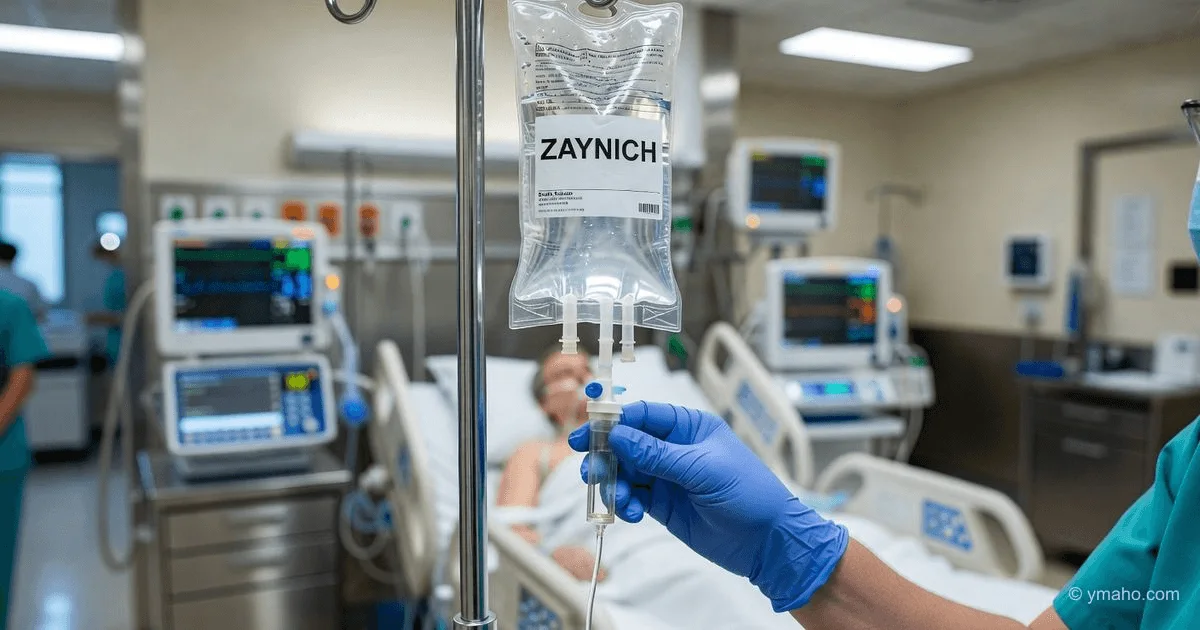
FDA Approves New Antibiotic ZAYNICH for Complicated Urinary Tract Infections
The U.S. Food and Drug Administration (FDA) has approved ZAYNICH (cefepime and zidebactam) for the treatment of adults with complicated urinary tract infections, including pyelonephritis. In phase 3 clinical trials, the drug demonstrated efficacy of 89.0% compared to 68.4% for meropenem, representing a significant step in the fight against antibiotic resistance.
The "Golden Shot" from Mumbai: Why ZAYNICH Approval Changes the Game for All Pharma
The point isn't the news itself—"FDA approves new antibiotic." Believe me, over the past five years, the regulator has greenlit dozens of similar applications. The point lies in the efficacy numbers and who exactly is behind this application. When you look at the ENHANCE-1 protocols, you don't just see another beta-lactam "killer." You see carbapenems—the gold standard for treating severe hospital-acquired infections—literally crumbling under the pressure of a new mechanism.
The 20.6% difference (89% vs. 68.4%) isn't just a victory in a statistical race. In the world of controlled randomized trials, superiority over meropenem occurs once in a decade. Usually, we're used to non-inferiority when the FDA approves a generic. Here we have a case of superiority. For an infectious disease specialist in the ICU, this means a patient with septic shock due to multidrug-resistant E. coli now has a real trump card. But for us analysts, it's also a signal: the global balance of power in the fight against Gram-negative flora is shifting. And it's shifting from a place no one expected.
Timeline and Context
Let's be honest: while Big Pharma chased GLP-1 (Ozempic and its siblings) and oncology, the antibiotic resistance front remained the domain of either startups or niche players. Wockhardt started this race over 12 years ago. That's a ridiculously long development time, but here's the inside scoop: Wockhardt spent about $800 million building an entire platform of six molecules. For comparison, in "big pharma," developing a single NCE (new chemical entity) costs an average of $2.6 billion.
Note the date in the documentation: approval occurred on May 29, 2026, but the public wave only started now. ZAYNICH received QIDP (Qualified Infectious Disease Product) status, granting it priority review, five-year exclusivity, and most importantly—Fast Track. Normally, approval takes years; here it was done in months. This shows how acutely the FDA feels the threat of carbapenem resistance.
Meanwhile, while we discuss complicated UTIs, Wockhardt has already filed an application with the EMA in Europe. A year ago, in January 2026, they received accelerated assessment, anticipating approval by July-August. Now with the FDA stamp, the European regulator will be more accommodating.
Who Wins and Who Loses
The first and obvious winner is Wockhardt. The company's stock surged 22% in a single session. Analysts from ET Intelligence Group have already calculated: peak sales of $1.5 billion (as Khorakiwala stated) is 15,000 crore rupees, 4.4 times the company's current consolidated revenue. Currently, we see a P/E of around 176—that's insanely expensive, but it's the price for a monopoly over the next 5-7 years.
The second winner is Indian pharma. This is a historic moment: ZAYNICH is the first new chemical entity fully discovered and commercialized by an Indian company to receive FDA approval. Previously, India was the "pharmacy of the world" for generics. Now they enter the innovators' club. Watch Glenmark—after their $700 million deal with AbbVie and Wockhardt's success, funds will start hunting for Indian research biotechs.
Who loses? Shionogi with its cefiderocol (Fetroja). ZAYNICH has a broader mechanism: Zidebactam binds to PBP2, while most older drugs only hit PBP3. It's a "nuclear option" for metallo-beta-lactamases and efflux pumps. Also losing is the U.S. healthcare system—the course cost is set at $10,000-12,000. This isn't a mass-market drug for clinics; it's an "emergency reserve" for ICUs.
What the Media Isn't Saying
An insight you won't find in the news.
Zidebactam isn't just a beta-lactamase inhibitor (like clavulanic acid). It's an enhancer with its own antibacterial activity. It hits PBP2 on its own. While journalists write about "antibiotic combinations," medical directors understand: this is a fundamentally different class. We're moving from the "antibiotic + savior" paradigm to a "two hammers hitting different vital bacterial proteins simultaneously" paradigm. This reduces the likelihood of resistance to nearly zero over the treatment horizon.
But there's dirty laundry too. Look at the side effects: hypertension is mentioned in 2% of cases. For an antibiotic, that's an odd side effect—usually we expect diarrhea or nephrotoxicity, but here it's blood pressure spikes. This could be problematic when prescribing to patients with cardiovascular comorbidities. Doctors will be cautious. Additionally, the drug is only available IV, every 8 hours (3 g every 8 hours with normal renal function). This keeps the patient hooked to an IV for 7-10 days, increasing the burden on medical staff.
And most importantly: approval is for cUTI. But Wockhardt is testing it for hospital-acquired pneumonia (HABP/VABP). If they get expanded indications—that's a real jackpot. For now, we're talking about a market of 600,000 hospitalizations per year in the U.S. That's a lot, but it's not the entire antibiotic market.
Forecast: Next 30 Days and 90 Days
Next 30 days.
We'll see the start of negotiations between Wockhardt and U.S. insurance companies (PBMs) and GPOs. The drug will now be included in formularies of major hospital networks (HCA, Kaiser Permanente). Most likely, they'll offer aggressive pricing—possibly a discount off the $10,000-12,000 list price to push carbapenems out of the market where resistance exists. Expect press releases about prescriptions at the Cleveland Clinic or Johns Hopkins—they love to be first.
Next 90 days.
The critical moment is the EMA. The European decision is expected in July-August. If the European Commission approves ZAYNICH (and with accelerated assessment, chances are 80%), Wockhardt will enter a $400-500 million market just from Europe. But the main thing is something else: applications for registration to treat hospital-acquired pneumonia are already with the FDA. Watch for results from the ENHANCE-2 and ENHANCE-3 studies. If positive topline data on pneumonia appears within 90 days, the company's target stock price could revise peak sales forecasts from $1.5 billion to $3 billion.
And one last thing: don't be surprised if within three months you see news about out-licensing rights to ZAYNICH in China. Production is set up in Italy, the clinical base is global, but to enter Asian markets, a local player with a sales network is needed. The deal size could be another $300-400 million upfront. Wockhardt needs to pay off a debt of 1,700 crore rupees, and they need cash now, not in five years.
This isn't just a drug approval. It's a landscape change in global antimicrobial therapy and a tectonic shift in the geographic distribution of innovative power. Keep an eye on that shelf in the emergency pharmacy—it will no longer be filled only by Swiss and American companies.
— Editorial Team