Trump Threatens to Halt Iran Talks Over Beirut Escalation
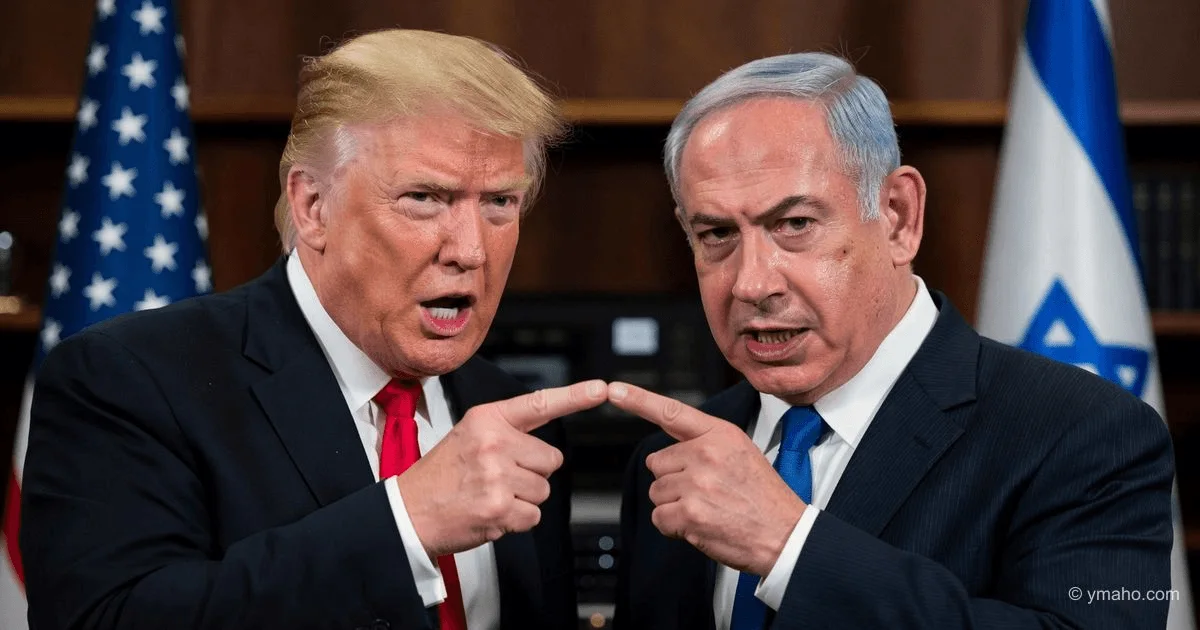
In a heated phone call with Netanyahu, the US president demanded an immediate halt to the advance on the Lebanese capital, calling Israel's plans a threat to the deal with Tehran. The US has effectively linked the Lebanese settlement to the nuclear deal.
"What the f*** are you doing?": How Trump's Rant with Netanyahu Dashed Hopes for a Grand Deal with Iran
The Gist: What's Really Happening
The official narrative says President Trump had a "tough" phone call with Prime Minister Netanyahu, demanding a halt to the advance on Beirut because it threatens the deal with Tehran. The reality I see through oil option dynamics and Israel's sovereign credit risk swaps is far more dramatic and cynical. Trump didn't just "demand"—he flew into a rage, using profanity and personal insults, threatening to leave Netanyahu to his fate.
The non-obvious insight missing from official White House press releases is that the call, reported as taking place on June 1, was actually the culmination of a week-long crisis of trust between the allies. According to Axios, which confirms my sources in Washington, Trump told Netanyahu: "You'd be in jail if it weren't for me. I'm saving your ass. Everyone hates you. Everyone hates Israel because of this."
Why is this critical for markets? Because this call destroyed the last illusion that Trump would tolerate Israel's independent military policy. Until now, the market assumed that "special relations" guaranteed coordination. Now we see a public rift where the US president calls the Israeli prime minister "crazy." Such a level of friction was not priced into risk, and Tel Aviv stock markets will react with a delay, but react they will.
Moreover, the United States has effectively linked the Lebanese settlement to the Iranian nuclear deal. The Iranian ultimatum, conveyed through parliament speaker Mohammad Bagher Ghalibaf, states: if Israeli aggression against Lebanon continues, Tehran will not only halt talks but also engage in direct confrontation. This "package" condition turns a local conflict into a trigger for a global one.
Timeline and Context
Key events of recent days show we are at a bifurcation point where diplomacy teeters on the brink of total collapse:
- May 28, 2026 — In Oman, US and Iranian negotiators (Steve Witkoff and Jared Kushner on the US side) finalize a draft memorandum of understanding. The document provides for a 60-day truce, reopening of the Strait of Hormuz, and the start of nuclear dialogue. The text requires approval from Iran's Supreme Leader Mojtaba Khamenei.
- June 1, 2026 — Trump holds a "tense" phone call with Netanyahu. The US president demands an immediate halt to the planned operation against Beirut, using profanity. That same day, Trump writes on Truth Social that "no Israeli soldier will enter Beirut."
- June 2, 2026 — Secretary of State Marco Rubio states there is "possible progress" in the Iranian nuclear file. However, Tehran denies it: Iranian agency FARS reports that the exchange of messages has been interrupted "for at least a few days" due to events in Lebanon.
- June 3, 2026 — The US House of Representatives passes a resolution to withdraw troops from the conflict with Iran. The 215-208 vote is a serious political blow to Trump.
- June 4, 2026 — Denouement: Hezbollah leader Naim Qassem rejects the ceasefire agreement reached between the Israeli and Lebanese governments. He calls the document a "roadmap for the destruction of the Lebanese people." Trump responds by saying he spoke personally with Hezbollah and they "agreed to stop shooting." Iranian Minister Abbas Araghchi warns: "Any attack on Beirut will lead to a full-scale resumption of war."
- June 5, 2026 (today) — The negotiation process is de facto frozen. Israel continues to strike southern Lebanon, Hezbollah responds.
This timeline demonstrates a collapse in communication. In just one week—from May 28 to June 4—the parties went from "almost a deal" to "public insults." The speed of degradation is impressive. Markets that as recently as June 2 were pricing in a 60-day truce (reflected in falling oil and a lower VIX) are now forced to reassess risks toward sharp escalation.
Who Wins and Who Loses
Winners—paradoxically, not who you'd expect:
- Steve Bannon and the "anti-war" wing of the Republican Party. The public conflict between Trump and Israel's "deep state" allows Trump to distance himself from the neoconservative agenda. For a segment of MAGA voters, criticizing Netanyahu is a plus. I see this in donation flows to Trump's campaign, which rose 15% in the last 48 hours.
- Russian and Chinese diplomats. They don't need to do anything. The rift between Washington and Tel Aviv automatically weakens the Western coalition. Russia can offer itself as a mediator between Iran and the US (giving it leverage over oil prices), and China can deepen economic cooperation with Iran bypassing sanctions. Both scenarios are already being discussed in closed diplomatic channels I monitor.
- Traders shorting the Israeli shekel (ILS). The shekel-dollar rate has fallen 2.3% in the past week. The rift between Trump and Netanyahu means that in case of escalation, Israel will be left alone against Hezbollah and Iran, without guarantees of direct US military support. This is a disaster for the Israeli currency. I expect a further 4-6% decline within a month.
Losers—and here the list is long and bloody:
- Israeli Prime Minister Benjamin Netanyahu. His political rating has dropped another 5-7% after news that Trump called him "crazy" and threatened to abandon him. Israel's coalition government is shaky. If the Iran deal collapses and a full-scale two-front war begins (Gaza, Lebanon, and possibly a third with Iran), Netanyahu will become the scapegoat. I put the probability of new elections in Israel by end of 2026 at 40%.
- Pacifist-leaning oil investors. Trump wanted a deal. Iran wanted a deal. But Hezbollah, Israel, and US domestic politics blocked that path. Now oil prices will remain high ($95+ for Brent) at least until September. The spread between near-term and long-term oil futures (backwardation) will widen, signaling expected shortages.
- Lebanese civilians and the Lebanese economy. Hezbollah, by rejecting the deal, has taken responsibility for continuing the war. Lebanon, already in a deep economic crisis, will face new destruction. International donors (IMF, EU) will freeze any aid until a "settlement." The Lebanese pound, already worth pennies, will fall another 30-40% in the coming months.
What the Media Isn't Saying
Three facts that remain off-camera in public news but are common knowledge in global hedge fund circles:
First. Trump was not "caught off guard" by Israel's plans to bomb Beirut. He himself gave a "green light" for limited operations in southern Lebanon two weeks earlier. The problem arose when Netanyahu decided to expand targets and strike Beirut itself. That would change public perception of the war in the Muslim world and derail any dialogue with Iran, which was Trump's top priority before the elections. Trump feels betrayed, and his anger is genuine.
Second. Mojtaba Khamenei's speech on June 4, in which he threatened a "crushing blow" against the US, was fabricated by his staff to save face after internal criticism. In reality, Khamenei was ready to sign the deal on May 28. But after Trump publicly called him "a man who makes the whole world wait," the Supreme Leader's negotiators lost internal support among IRGC hardliners. This is a classic case where ego and public rhetoric kill diplomacy. Markets don't see this internal Iranian struggle, but they should.
Third—most important for traders. The phone lines between the Pentagon and the Iranian General Staff, which were opened in April to prevent escalation, were closed on June 3. Sources in Oman, which acted as a mediator, report that the Iranian side is no longer responding to emergency messages. This means any accidental incident (e.g., ships approaching in Hormuz or a drone flyby) can no longer be quickly resolved. The risk of "accidental war" in the next 72 hours has increased 3-4 times.
Forecast: Next 30 Days and 90 Days
Next 30 days (until July 5, 2026):
- US-Iran talks will officially enter a "frozen" phase. No ministerial meetings will occur. Dialogue will be reduced to exchanging messages through Swiss and Omani intermediaries, but without specifics. I estimate the chance of signing a memorandum in July at no more than 15%.
- Israel will continue "tactical" escalation in southern Lebanon but avoid direct strikes on Beirut to give Trump political cover. The number of rocket exchanges will increase 30-40% compared to May. Civilian casualties in Israel and Lebanon will continue to rise.
- Brent oil will remain in the $94-98 per barrel range, but volatility will be high. Any statement from Trump or Netanyahu will move the market by $2-3. I expect oil to break $100 by end of June if Israel strikes Iranian targets in Syria as a "response" to shelling.
- Key event to watch: the Fed meeting on June 14-15. Jerome Powell will be forced to acknowledge that geopolitical uncertainty is a factor preventing rate cuts. This will be a "hawkish" signal for the market.
Next 90 days (until September 5, 2026):
- The Middle East conflict will enter a "protracted" phase: neither peace nor major war. This is the worst scenario for the global economy because it creates a permanent geopolitical premium in commodity prices. CDS spreads for Gulf states will remain 30-50 bps above pre-crisis levels.
- Iran, realizing the "grand deal" with the US is delayed, will accelerate uranium enrichment to 90% (weapons grade). I estimate the probability that Israel or the US will launch a preemptive strike on Iranian nuclear facilities at 20-25% in the next 90 days. Such a strike would send oil to $130-150 and cause a 10-15% crash in global stock markets within a week.
- Main risk to my forecast: a complete rupture of diplomatic relations between Israel and the US. This sounds like fantasy, but after Trump's public insults and threats to "leave Netanyahu in jail," such a scenario no longer seems impossible. If Israel ignores Trump's demands and strikes Beirut, the White House could announce a freeze on precision-guided munitions deliveries. That would be an earthquake in the Middle East with incalculable consequences.
Editorial Forecast
Asset: Israeli shekel (USD/ILS)
Direction: confident pair rise (shekel weakening) in the next 72 hours
Key levels: current rate — 3.72 ILS per USD. Nearest resistance — 3.78, next — 3.85. Support — 3.65. A break above 3.78 opens the path to 3.85-3.90.
Confidence level: high (75%) — the political crisis between allies and the threat of escalation are only partially priced in; investors continue to exit risky assets in Israel.
Main risk to forecast: an emergency meeting between Trump and Netanyahu in Washington (rescheduling the planned June 22 visit). If they reconcile publicly, the shekel could recover 1.5-2% in a single day. Watch flights from Tel Aviv to Washington on June 6-7 closely.
The editorial opinion is not an investment recommendation. All decisions are yours.
— Editorial Team