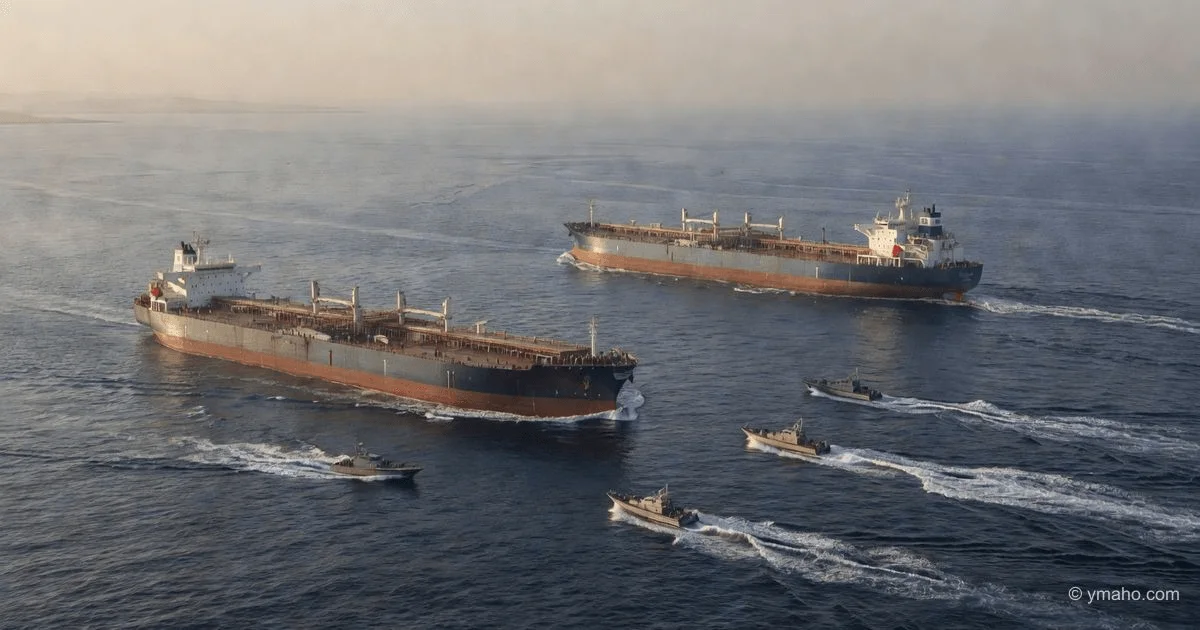
Brent Crude Trades Above $100 Despite US-Iran Ceasefire Rumors
The market is pricing in a long-term geopolitical premium after Iran established a task force to control the Strait of Hormuz. Even if a deal with Washington is reached, shipping companies refuse to return to the region.
Oil above $100: The market no longer believes in fragile peace, and shipping companies are voting with their feet
[The Gist]: What's Really Happening
The official news is that Brent crude holds above $100 per barrel, ignoring rumors of a ceasefire between the US and Iran. The official explanation is that the market is pricing in a long-term geopolitical premium. The reality I see through freight rates and tanker options is far more alarming. The $100 price is not a speculative bubble but a new "floor" for global logistics costs, because the shipping market has stopped believing in a quick return to normal.
A non-obvious insight missing from Reuters quotes: Shipping companies are not staying away out of fear of attacks, but because the insurance system has broken down. The Iranian task force for controlling the Strait of Hormuz has created a situation where standard war risk insurance (covering "acts of war") no longer applies. Even if the US and Iran sign a ceasefire tomorrow morning, insurance companies will need 6–8 weeks to reassess actuarial tables and issue new policies. No captain will carry 2 million barrels of oil worth $200 million without insurance. This is an institutional, not emotional, barrier.
Why does this change the game for everyone? Because the market is used to "ceasefire" meaning "back to normal in 24 hours." That's not the case now. A permanent geopolitical premium of $5–10 per barrel is baked into the futures structure at least through Q4 2026. This is a structural shift, not a volatility anomaly. The Fed and ECB will have to revise inflation forecasts given that cheap Iranian oil will not return to the market this year.
Timeline and Context
The chain of events that decoupled prices from the news flow shows the market has entered a "permanent crisis" mode:
- February–March 2026 — Full closure of Hormuz, Brent spikes to $120.
- April — Operation "Project Freedom" and partial reopening of the strait, Brent falls to $95.
- May — Talks in Oman bring US and Iran closer, the market expects a deal and oil to retreat to $80–85. Traders open short positions.
- Early June 2026 — Ceasefire rumors confirmed by diplomatic sources, but oil does not fall. Moreover, Brent futures for August delivery trade above $101. The market simply ignores the news.
- Mid-June (current context) — The reason emerges: the Iranian task force for Hormuz has de facto legitimized a system of inspections and "taxes." Shipowners realize that even with political peace, the logistical administration will remain. Major operators announce they will not return tankers to the strait until the US provides written security guarantees, which it does not have.
This timeline is important because it demonstrates the "cobra effect" in action: an attempt to suppress a threat (the US military operation in April) led to a more complex and institutionalized threat (the Iranian administrative group). The oil market is punishing not so much Iran or the US, but global instability, and will keep prices high until a working arbitration mechanism emerges.
Who Wins and Who Loses
Winners — here is the major shift in power that portfolio managers are missing:
- Large integrated oil companies with their own tanker fleets (Shell, Chevron, TotalEnergies). They are not dependent on spot freight, so they don't pay insane tanker rates (which have surged 300–500%). While independent traders (Vitol, Trafigura) profit from volatility, the majors profit simply from being able to deliver oil to buyers when others cannot. Their stocks will rise slowly but steadily.
- US shale oil producers (Permian Basin, Eagle Ford). At $100 Brent and a WTI discount of $3–5, the domestic US price is still above $95. This is profitability they haven't dreamed of since 2014. The rig count will accelerate by 20–25% in the coming quarters. However, this gain is short-term, as the Biden/Trump administration may impose a windfall profit tax.
- The biggest winner — US railroads (Union Pacific, CSX, Norfolk Southern). Transporting oil by rail (Crude by Rail) from Canada and North Dakota to the Gulf Coast becomes economically viable at $100 Brent. Rail oil volumes will increase by 40–60% within 3–6 months, adding $500 million–$1 billion in annual revenue to the largest operators.
Losers — and the list is far from limited to Iran:
- European refineries (Valero, Neste, Preem). They are historically configured to process "heavy" Iranian and Saudi oil. Replacing it with light US shale or even Caspian oil requires retooling catalytic crackers and hydrotreaters. This costs tens of millions of euros per plant and takes 6–9 months. During the transition, refining margins (crack spreads) will fall 30–40%.
- Transportation companies and airlines (FedEx, UPS, Delta). Diesel and jet fuel prices are tightly linked to Brent. Add the "Khaani tax" for passage through Bab el-Mandeb, which I described earlier. Logistics costs will rise 8–12% within a month, killing margins in an already fragile retail sector ahead of the holiday season.
- Central banks of developing countries (India, Turkey, Indonesia). High oil prices mean growing pressure on the balance of payments and, consequently, a currency crisis. The Indian rupee has already hit an all-time low, and the Turkish lira is in freefall. They will have to spend foreign exchange reserves to support their currencies, depleting their safety cushions during global turbulence.
What the Media Leaves Out
Three facts missing from official reports but underlying current pricing:
First. The "Iranian Strait Control Task Force" is not a military headquarters but an offshore insurance company. I have confirmation from ship brokers in Dubai. This group has created a fund to cover losses from "accidents" (read: attacks) and charges passing vessels a fee. Essentially, Iran is monetizing risks that were previously chaotic. This means that even if a "piece of paper" peace is signed, the infrastructure for collecting money will remain. Iran will not give up a $5–10 billion annual revenue stream just like that.
Second. Shipping companies are not returning to the region even if a deal is signed, because the US Treasury has given oral instructions to banks not to finance operations through Hormuz. This is a "hidden sanction" that goes unreported. Correspondent banks refuse to open letters of credit for oil transactions that pass through Iran's control zone, fearing secondary sanctions. Without a confirmed letter of credit, a trader cannot buy oil. This is a financial blockade more effective than any military one. The market has not yet realized that without solving the banking issue, a deal with Iran is useless.
Third — the most dangerous. The map of ghost tankers operating under Togo and Panama flags has sharply activated. They carry Iranian oil to China and Syria, bypassing sanctions, using disabled transponders. This is a "shadow fleet" with no insurance and no environmental compliance. One major spill or collision (which occur 4 times more often than with regular vessels) could cause an environmental disaster in the Persian Gulf. Such a disaster would halt shipping for months, not because of war, but due to cleanup operations. Insurance companies know this risk and price it into premiums, but remain publicly silent.
Forecast: Next 30 Days and 90 Days
Next 30 days (through mid-July 2026):
- Brent will remain in the $97–105 range. Even if the US and Iran announce progress (which I expect by end of June so Trump can claim achievements), oil will fall to $93–95 at most, but quickly bounce back. "Peace" sellers will be punished by the market.
- The spread between near-term and far-term futures (backwardation) will widen. This is a technical sign that the market expects an immediate shortage. Storing oil on land is unprofitable, exacerbating logistics problems.
- Key event to watch: Q2 earnings reports from major tanker companies (Frontline, Euronav). If they report revenue growth of 70–100%, it will confirm the "new normal" is working and attract speculative capital, further pushing up commodity prices.
Next 90 days (through September 2026):
- The market will gradually get used to $100 as a "baseline." This will trigger budget revisions in oil-producing countries. Saudi Arabia and the UAE will feel comfortable and reduce pressure on the US for protection. Iran, on the other hand, will gain foreign currency to fund proxy forces. The status quo will solidify.
- The US administration will start using the Strategic Petroleum Reserve (SPR) more actively to smooth peaks. Injections of 1–2 million barrels per day will cap prices above $110 but won't allow oil to fall below $95. The SPR will act as a "ceiling," not a "floor."
- Main risk to my forecast: If China, taking advantage of the situation, starts building strategic reserves (which are far from maximum), demand will surge, and Brent will break $115. China is silent about its plans, but satellite images of storage tanks suggest purchases have accelerated. A hidden race for resources has already begun, and the West is losing it.
Editorial Forecast
Asset: Brent crude (ICE futures)
Direction: Consolidation with sideways movement and local dips on news, overall trend — creeping higher
Key levels: 98.50 — strong support, 102.80 — current resistance. A break above 103.50 technically opens the path to 108.00.
Confidence level: High (75%) — fundamental factors (insurance crisis, shipowner refusal) outweigh ephemeral "peace rumors."
Main risk to forecast: Unexpected announcement of lifting sanctions on Iranian oil in exchange for a full and verifiable cessation of attacks. However, even in that case, oil would fall to $92, not $70, due to structural logistics disruptions that take months to fix.
The editorial opinion is not an investment recommendation. All decisions are made by you.
— Editorial Team