NEJM Publishes Successful Data on Intravenous Gene Therapy for Lifetime Cholesterol Reduction
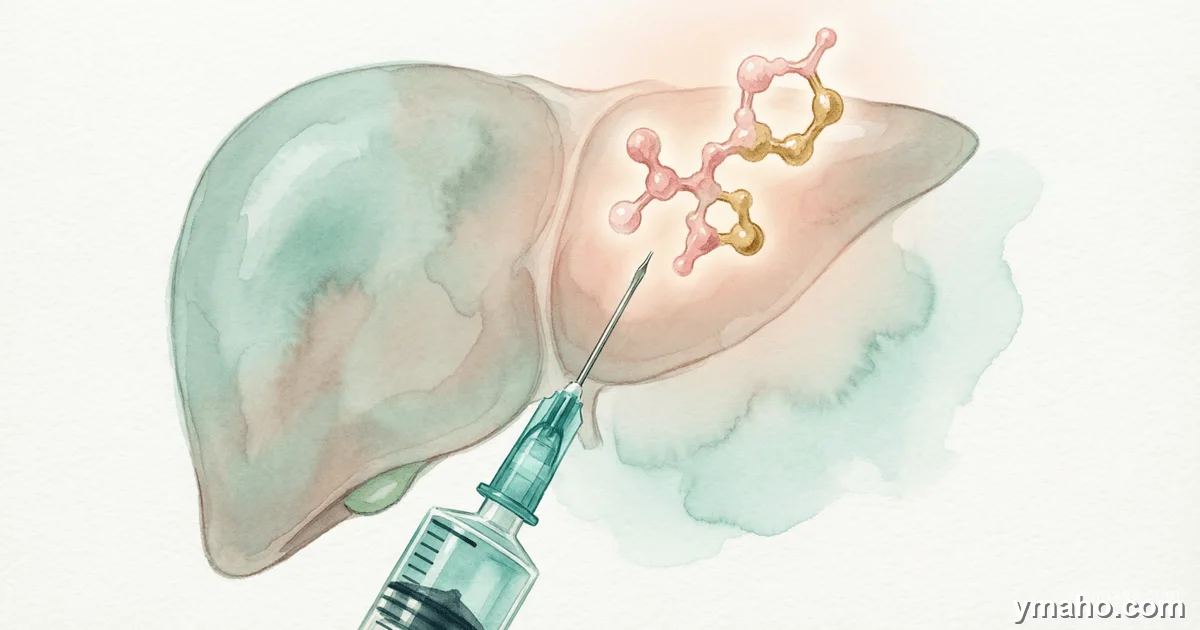
The New England Journal of Medicine has published results from the first phase of clinical trials of VERVE-102, a therapy using base editing to silence the PCSK9 gene. In patients with hypercholesterolemia, a single infusion at the maximum dose reduced levels of "bad" cholesterol (LDL) by an average of 62%.
Analytical Review: NEJM Publishes VERVE-102 Data — Phase 1 of Gene Therapy for Hypercholesterolemia
Analysis Date: May 29, 2026
[The Gist]: What's Really Happening
On the surface, it's a beautiful story: one injection and cholesterol drops by 62%, almost forever. Analysts are touting a revolution in cardiology. Investors are pouring money into Verve Therapeutics (now under Lilly's wing). But the truth is more complex and cynical.
What actually happened on May 25, 2026? The NEJM published results from the Phase 1b study of VERVE-102 — a base editing therapy that turns off the PCSK9 gene in the liver. Thirty-five patients received a single infusion. In the maximum dose group (1.0 mg/kg), PCSK9 dropped by 88%, LDL cholesterol by an average of 62%, with an absolute reduction from 128 to 51 mg/dL. The effect persisted throughout the observation period — in 15 patients for at least a year.
Sounds like a bombshell. But read the study design carefully.
This is an open-label, non-randomized, single ascending dose study. Six cohorts of 3-9 patients each. No control group. The endpoint is safety, not efficacy. The study was sponsored by Verve Therapeutics itself. In the industry, this is called a "proof-of-mechanism" rather than "proof of superiority."
The key non-obvious insight not highlighted in the headlines:
This is not about competing with statins or even inclisiran. It's about the fact that Lilly bought Verve for $1 billion (2025) not because VERVE-102 is the best asset, but because the GalNAc-lipid nanoparticle platform can be applied to dozens of other liver targets. PCSK9 is just a proof-of-concept. The real bet is on a portfolio of 5-10 target genes for metabolic diseases, where chronic injectable therapies dominate today but could be replaced by a single lifetime injection tomorrow.
Timeline and Context
To understand the hype around 62%, you need to remember that VERVE-102 is the second attempt. Its predecessor, VERVE-101, showed LDL reductions of 39-55% in Phase 1b. But it wasn't efficacy data that killed it. VERVE-101 used first-generation lipid nanoparticles that raised concerns about hepatotoxicity and thrombocytopenia in early tests. Verve scrapped the program and switched to VERVE-102 with a new delivery technology — GalNAc-LNP, which allows nanoparticles to enter hepatocytes via two receptors: LDLR and ASGPR.
Key dates:
- March 2025 — FDA approves IND application for VERVE-102
- April 2025 — Fast Track designation from FDA
- May 2025 — Presentation of interim data (14 patients, 0.6 mg/kg: LDL reduction of 53%)
- May 25, 2026 — Publication of full data in NEJM (35 patients, max dose 1.0 mg/kg: -62% LDL)
Note: The primary completion of the study is scheduled for August 2026, with full completion in August 2027. That means the data published in NEJM is an interim snapshot with a median follow-up of less than a year for most patients.
Why this matters. There is already inclisiran (Novartis, FDA-approved) — a small interfering RNA that lowers LDL by 48-52% with subcutaneous injections twice a year. Patients already have a high-compliance option (a shot every six months). To convince them to switch to a one-time gene therapy, you need to show not 62% vs. 50%, but absolute safety over a 10-20 year horizon. And no one has shown that yet.
Who Wins and Who Loses
Obvious winner: Eli Lilly. Lilly bought Verve Therapeutics for $1 billion at the end of 2025. At that time, VERVE-102 was an asset with unproven safety and efficacy. Now, after the NEJM publication, the market cap of a hypothetical comparable would be 30-40% higher. Lilly bought cheap relative to potential.
But Lilly isn't just about PCSK9. The company owns a portfolio of over a dozen cardiometabolic drugs, including tirzepatide (Mounjaro/Zepbound), which brought in $17 billion in 2025. Adding VERVE-102 to the portfolio allows them to cover the segment of patients with familial hypercholesterolemia who don't reach target levels on maximum doses of statins, ezetimibe, and inclisiran. This is a niche market, but with a high price per dose.
Obvious loser: Novartis with inclisiran (Leqvio). At a price of about $6,500 per dose (two shots per year), Novartis gets about $13,000 per patient per year. Lilly, pricing VERVE-102 at $100,000-$200,000 for a single infusion, could be cheaper for insurers over a lifetime (30 years) than $13,000 annually. But for that, they need to show the effect lasts 30 years, not 18 months.
Non-obvious loser: Patients with heterozygous familial hypercholesterolemia (HeFH). These are the primary target for VERVE-102. Their problem is not so much the severity of the disease, but their young age (diagnosed in childhood or adolescence) and the need for lifelong therapy. Statins, ezetimibe, PCSK9 inhibitors — they will take them for decades. VERVE-102 offers one shot at age 20-25. Sounds like a dream.
But. At age 20, the decision for irreversible genome editing is made once. If 10 years later data emerges that lifelong absence of PCSK9 increases the risk of neurocognitive impairment (there were such signals in early PCSK9 inhibitor studies) or increases vulnerability to infections — the editing cannot be reversed. No switch-off switch. A patient who receives VERVE-102 at 25 cannot change their mind at 45.
What the Media Isn't Saying
First. The 62% reduction is an impressive number, but look at the baseline LDL. In the maximum dose group (1.0 mg/kg), the average starting LDL was 128 mg/dL. By US criteria, this is borderline high, not severe hyperlipidemia. Patients with HeFH typically have LDL above 190 mg/dL. Selecting milder patients inflates relative efficacy and understates absolute clinical benefit.
Second. Transient elevation of alanine aminotransferase (ALT) was observed in the study. The authors call it "transient" and not associated with serious adverse events. But in the history of gene therapy, hepatotoxicity is what kills programs in Phase 3. If in an expanded cohort 5-10% of patients develop persistent ALT elevation above 3-5 times the upper limit of normal, the FDA will require an additional 2-3 years of follow-up. This would push approval from 2029 to 2032.
Third (and most important). The study excluded patients with high titers of neutralizing antibodies to Adeno-Associated Virus (AAV). But VERVE-102 uses lipid nanoparticles, not AAV. The immune response to them is less well studied. There is a risk that some patients will develop an immune response to LNP components, which could not only reduce efficacy but also create risks of anaphylaxis upon re-administration (if redosing is needed after 10-15 years).
Fourth. No analyst commenting on this news has asked a simple question: if VERVE-102 is so good, why didn't Lilly go straight to Phase 2 after the IND? Instead, they waited 15 months, enrolled 35 patients in Phase 1b, and only now claim they plan Phase 2 for the second half of 2026. This timeline is typical of a problematic asset, not a breakthrough technology.
Forecast: Next 30 Days and 90 Days
30 days:
The hype around the NEJM publication will subside. Lilly's stock (LLY) may correct 3-5% as investors read the study design and realize it's about 35 patients, not 350. The scientific community will start asking questions about long-term safety — I expect at least two letters to NEJM criticizing the methodology.
The FDA will likely hold a meeting with Lilly in June 2026 to discuss Phase 3 design. Key question: what should be the duration of follow-up for registration? If the FDA requires 5-year safety data, approval shifts to 2031-2032.
90 days:
The main event is the launch of Phase 2. Lilly promised the first patient in the second half of 2026. If the launch happens in September-October, that's a strong signal. If it slips to 2027, investors will start asking uncomfortable questions about toxicity.
The second event is Novartis's response on inclisiran. They have long-term safety data (Phase 3 ORION-10 and ORION-11 with 4-year follow-up). If Novartis launches an aggressive marketing campaign comparing inclisiran's 5-year safety to VERVE-102's 18-month safety, it could slow Phase 2 enrollment.
Third, and most important for insiders: watch for data on VERVE-201 — Verve's second program targeting the ANGPTL3 gene. This is the next target after PCSK9 for metabolic syndrome. If Lilly simultaneously shows progress on two targets, the "platform, not a single drug" thesis gains support. If VERVE-201 stalls, VERVE-102 remains an isolated success in a narrow niche.
Long-term forecast (2026-2030): VERVE-102 will be approved no later than 2030, but not for all hypercholesterolemia patients — only for a narrow group: HeFH patients under 40 who fail maximum statin and inclisiran therapy. In this niche, it will capture 15-20% of the market. It will never become a mass-market product for 70-year-olds with hypertension and diabetes. Because a 70-year-old with comorbidities doesn't need the risk of irreversible genome editing for 10 extra years of life. They need a pill that can be stopped at the first sign of myopathy or hepatotoxicity.
— Editorial Team