Iran's New Leader Khamenei Calls on Gulf States Not to Cooperate with the US
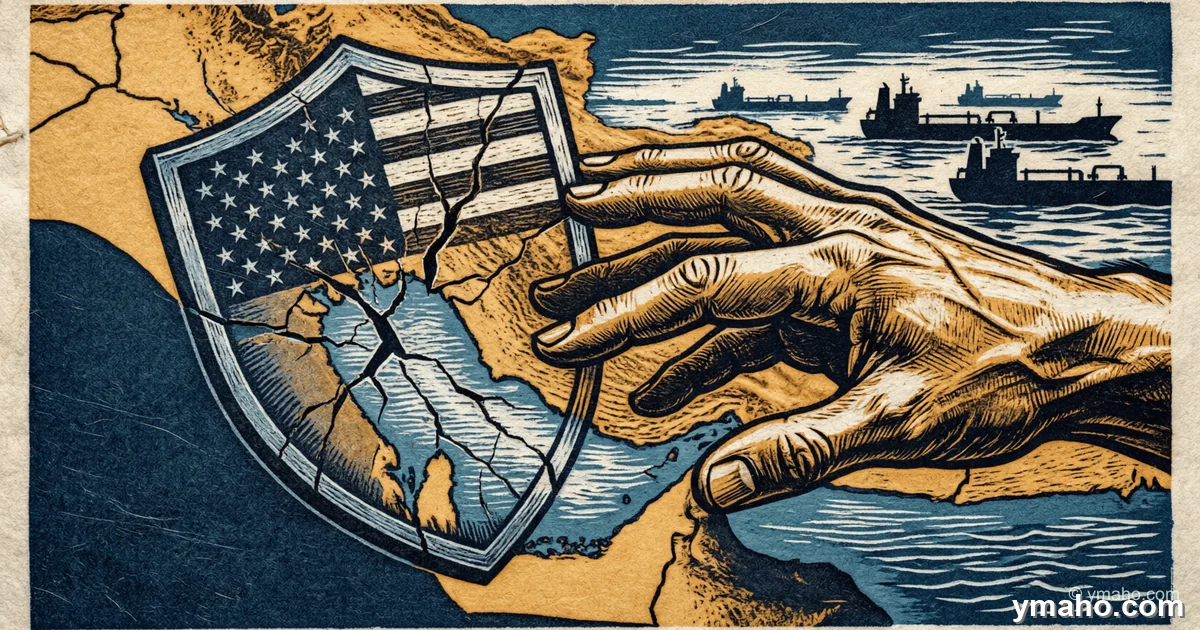
In his message, Mojtaba Khamenei stated that the region's states will no longer serve as a shield for US military bases. He emphasized that US influence in the Middle East is irreversibly declining and called on Muslim countries to strengthen cooperation.
Headline: Khamenei's Message: Why Markets No Longer Believe in the 'Gulf Shield'
Colleagues, while news channels are reprinting Mojtaba Khamenei's threats against the US, I'm watching the market reaction. And it speaks louder than any words from the Iranian leader. The statement that Gulf countries will no longer be a 'shield' for US bases is not news. It is a statement of fact that oil traders and defense contractors already priced in three weeks ago.
Let's break down what lies behind the rhetoric, why Saudi Arabia has already made its choice, and how this shift is redrawing the map of Middle Eastern logistics.
[The Gist]: What's Really Happening
Khamenei stated that 'the hands of time cannot be turned back' and that the US is 'moving further away from its former status every day.' This is not just a threat. It is legitimization of a new order in which Iran claims the role of the sole guarantor of security in the Strait.
The key phrase that markets have already priced in: 'Washington no longer has a safe haven for hosting military bases.'
What does this mean for logistics? US military facilities in Qatar (Al Udeid Air Base), Bahrain (US Fifth Fleet), UAE (Al Dhafra Air Base), and Kuwait (Camp Arifjan) are now formally under threat. Iran cannot destroy them—it lacks the military power. But it can make them politically toxic for the local monarchies.
Timeline and Context
Khamenei's statement is a reaction to a series of US strikes on May 25-26 against Iranian missile launchers and minelaying boats. But the context is broader.
- April 8, 2026 — A fragile truce between the US and Iran. It holds by a gentleman's agreement and mediation by Pakistan and Qatar.
- May 25, 2026 — The US strikes southern Iran. The Pentagon calls it 'self-defense.' Iran sees it as a violation of the truce.
- May 26, 2026 — Khamenei publishes his message. He has not appeared in public since taking office in March (after the death of his father Ali Khamenei in US and Israeli strikes). All his statements are broadcast via Telegram or state TV—this creates an aura of mystery and possibly conceals his real physical condition.
- May 27-28, 2026 — Oil prices fall 4-5% despite the threats. Brent drops to $92.25.
What's important here? The market didn't buy the escalation. Why? Because Khamenei's statement coincided with two other events he didn't mention.
Who Wins and Who Loses
Winners: Qatar and Oman. Why? Because Khamenei called on 'Muslim countries in the region to strengthen cooperation.' This is a direct signal to Doha and Muscat: 'you are becoming the main mediators.' Qatar has already denied rumors of '$12 billion' for Iran, but that only confirms that negotiations are going through Doha. Oman, according to Iranian media, will jointly manage shipping in the Strait of Hormuz with Iran after the deal.
Winners (non-obvious insight): Russian and Chinese diplomats. Khamenei's statement that the US is 'moving away from its status' is rhetoric that Beijing and Moscow have been promoting for years. For them, the US 'withdrawal' from the Middle East is an opportunity to increase their influence through the UN Security Council and arms deals with Saudi Arabia and the UAE.
Winners (even less obvious): Turkey. Erdogan has been strengthening ties with Iran for months, despite differences over Syria. If the US loses its 'safe haven' in the Gulf, Turkey becomes an alternative guarantor for Sunni monarchies. This could lead to new contracts for Turkish drones (Bayraktar) instead of American ones.
Losers: Saudi Arabia and the UAE. They are caught between a rock and a hard place: Khamenei publicly says they are no longer a 'shield' for the US. If they keep US bases, Iran will consider them legitimate targets. If they ask the US to leave, they lose protection from Iran. This is a classic 'abandoned ally' dilemma.
Losers: US defense contractors (Lockheed Martin, RTX) based in the region. Any instability at bases means contract renegotiations for maintenance and basing. Lockheed shares, which rose on war rhetoric in April, have been flat for the last 10 days—the market is pricing in the risk of a withdrawal from Qatar and Bahrain.
What the Media Isn't Saying
Here's my main insight. What won't appear in CNN headlines but is already being discussed in Riyadh.
Khamenei's statement about 'shields' is the public version. Behind closed doors, Iran has already struck separate agreements with Qatar and Oman that render this threat hollow.
Iran cannot expel the US from the region. But it can negotiate with local elites that US bases will remain but be 'neutralized'—meaning they won't be used for strikes on Iran in exchange for Iran not targeting those bases and not interfering with their national shipping.
Indirect confirmations:
- Qatar denies '$12 billion' — but does not deny the fact of negotiations. The denial was too quick and too categorical ('complete fabrication'). This is often a sign that the real amount or terms were different.
- Oman becomes maritime coordinator — according to Iranian media and confirmed by ADNOC, Oman will manage the Strait jointly with Iran. Oman is a traditional mediator between the US and Iran. Back channels go through it.
- Aircraft carrier withdrawal — Iranian parliamentarian Azizi claimed that two US aircraft carriers (USS Abraham Lincoln and USS Gerald Ford) and 9,000 US troops are leaving the region. The US has not commented. If true, the 'shield' is thinning not because of Iran's threats but because of real force redeployment.
Conclusion: Khamenei speaks for domestic audiences and the radical wing of the IRGC. What matters for markets is what he didn't do. He didn't declare jihad. He didn't order a blockade of the Strait. He simply outlined a new reality where Gulf countries will navigate between the US and Iran, not be anyone's 'shield.'
Forecast: Next 30 Days and 90 Days
30 days (by end of June 2026):
- Talks in Doha continue despite the rhetoric. The main question is not 'will the US leave' but 'what will be the rules of navigation.' Expect an announcement of a 'joint Strait management' agreement involving Oman and possibly Qatar.
- Brent oil will remain in the $90-95 range, but volatility will decrease. Markets will get used to Khamenei's threats and stop reacting (as they stopped reacting to missile launches).
- Shares of Qatari and Omani logistics companies (if you have access) will rise 5-8%. They become the 'gateway to the Gulf.'
90 days (by end of August 2026):
- The US will partially withdraw forces from Qatar and Bahrain, redeploying them to Oman (which remains a 'friendly neutral') and to aircraft carriers in the Indian Ocean. This will be presented as 'optimization,' not a retreat.
- Iran will get a partial unfreezing of assets (not $10 billion, but less—$4-5 billion) and the lifting of the naval blockade in exchange for freezing its nuclear program for 6 months.
- Regional stock markets (Saudi Arabia, UAE) will rise 3-5% because the threat of direct conflict decreases and oil revenues remain stable.
But there is a risk of a hard scenario. If Khamenei (who has never appeared in public) dies or is deemed incapacitated, the power struggle in Tehran could lead to real escalation. The radical wing of the IRGC might provoke an incident to avenge the killing of Khamenei's father (Ali Khamenei, killed on February 28, 2026, in US and Israeli strikes). Probability: 15-20%. Then oil would spike to $110+.
Editorial Forecast
Asset: Brent crude oil — sideways with a downward trend over the next 24–72 hours. Current level: $92.50. Range: $91.00 - $94.00. Confidence level: medium (60%). Main risk: sudden news of an actual US troop withdrawal from Qatar (not just Khamenei's statements) would push oil up by $3-5, as investors would see the 'shield' truly disappearing. Watch for official Pentagon statements, not Paydar. Khamenei's rhetoric is already priced in; real actions are not.
— Editorial Team