FDA Approves First Combination Immunotherapy for Bladder Cancer
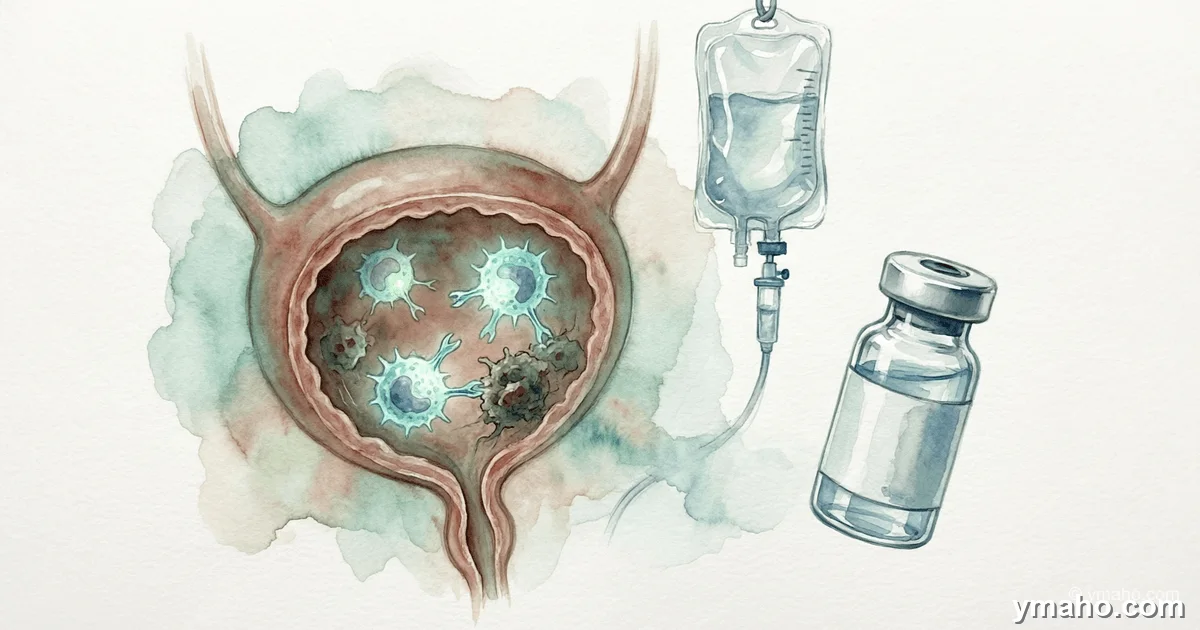
The U.S. Food and Drug Administration (FDA) has approved durvalumab in combination with BCG vaccine for the treatment of adult patients with high-risk non-muscle-invasive bladder cancer. The decision is based on results from the POTOMAC trial, which demonstrated a statistically significant improvement in disease-free survival (HR 0.68).
Analytical Review: FDA Approval of Durvalumab and BCG Combination for Bladder Cancer
May 28, 2026
[The Gist]: What's Really Happening
On the surface, the FDA is expanding indications for a well-known immuno-oncology drug. Another approval for AstraZeneca, another option for patients. But the real story here isn't about efficacy. It's about the desperation of urological surgery and the chronic structural collapse in the BCG vaccine supply chain.
The FDA approved durvalumab (Imfinzi) in combination with BCG for adults with newly diagnosed high-risk non-muscle-invasive bladder cancer (NMIBC). The key word is BCG-naïve, meaning patients who have never received BCG before. This is a radical shift in the first-line algorithm.
Data from the POTOMAC trial (NCT03528694): a 32% reduction in the risk of recurrence or death (HR 0.68; 95% CI 0.50-0.93; p=0.0154) at a median follow-up of 60.7 months. Two-year disease-free survival: 86.5% in the durvalumab group versus 81.6% in the BCG-alone group.
But let's be honest: a 5% absolute difference at a median follow-up of 5 years is not a revolution in oncology. It's a marginal improvement that comes with significant toxicity: grade 3-4 adverse events in 21% versus 4% with BCG alone.
Timeline and Context
To understand why this approval happened now, we need to look at the timeline of the crisis.
The standard of care for NMIBC for the past 30 years has been intravesical BCG therapy. The problem: a global shortage of this vaccine. The only manufacturer for the U.S. market is Merck with Tice BCG. Disruptions have been ongoing for years, and the situation is not improving.
Against this backdrop, the bladder cancer market has fragmented into two distinct segments:
- BCG-naïve — primary patients who receive BCG as first-line therapy. This is the bulk, approximately 75% of the 84,530 new bladder cancer cases in the U.S. annually.
- BCG-refractory — those who have relapsed after BCG. Here, pembrolizumab (Keytruda), gene therapy Adstiladrin, and Kiromic (late 2025) have already been approved.
Durvalumab+BCG is breaking into the first segment — where there was previously a monopoly of a single vaccine. And here lies a non-obvious insight not found in press releases:
Insight: This approval is not so much a victory for immunotherapy as it is an FDA acknowledgment that the system cannot guarantee BCG supplies. The combination with durvalumab allows stretching of the scarce resource — patients require fewer BCG cycles, or the vaccine's efficacy may be lower while maintaining clinical outcomes. In effect, AstraZeneca is monetizing a competitor's (Merck) supply chain failure, not creating fundamentally new biology.
Compare with results from competitor trials. CREST (sasanlimab + BCG) showed a similar HR of 0.68. However, ALBAN (atezolizumab + BCG) failed — HR 0.98, p=0.9106. Same target (PD-L1), different antibody — and a negative result. Urologists will ask: why does one PD-L1 inhibitor work and another doesn't? There is no official answer, but differences in binding affinity, half-life, and tissue penetration may play a role.
Who Wins and Who Loses
Absolute winner — AstraZeneca. Imfinzi already brings the company $6.1 billion annually (2025), and Q1 2026 showed 34% year-over-year growth to $1.7 billion. The NMIBC approval opens a market worth $3.6 billion globally in 2026, with projected growth to $7.4 billion by 2033.
AstraZeneca's strategic move is flawless:
- March 2025 — approval of Imfinzi for muscle-invasive bladder cancer (later stage, but smaller volume)
- May 28, 2026 — approval for NMIBC (early stage, main patient volume)
- In the pipeline — combination with enfortumab vedotin (VOLGA trial), with positive event-free survival data already reported.
Thus, a urologist who starts with Imfinzi at an early stage is highly likely to continue using it upon progression to later stages. This is not just a drug — it's an ecosystem lock-in for the patient.
Who loses? Merck (key BCG supplier in the U.S.). Their shortage is direct economic gain for AstraZeneca. Every patient receiving the durvalumab combination is a patient who could have received BCG alone if supplies were stable. Shortage is the best sales trigger money can buy (and it came for free).
Patients in a tough spot. Yes, the risk of recurrence decreases. But at the cost of 21% serious complications. Mark Tyson from the Mayo Clinic stated outright that the risk of durvalumab is "clearly not justified for patients with small-volume, well-differentiated Ta tumors or limited CIS." Who really needs it — patients with high-volume T1 tumors, concomitant CIS, who refuse radical cystectomy.
What the Media Isn't Saying
First. The POTOMAC trial had a third arm — durvalumab plus BCG induction only, without maintenance therapy. Results for this arm are fragmentary in the public domain. If the effect holds without 2-3 years of BCG maintenance, it changes the entire treatment economics and reduces the burden on the scarce vaccine. But the data are not fully disclosed.
Second. No article mentions cost. In the U.S., 13 cycles of durvalumab (1500 mg IV every 4 weeks) run approximately $120,000–$150,000 for immunotherapy alone, plus BCG, plus infusions. Under Medicare, this will be a heavy burden. The question of cost-effectiveness is not raised.
Third. Toxicity is understated. Grade 3-4 events at 21% are not a mild rash. These are serious immune-mediated pneumonitis, colitis, hepatitis, and endocrinopathies requiring hospitalization and high-dose steroids. For comparison, in melanoma on pembrolizumab, grade 3-4 toxicity is about 15%. Here, 21% is high for an adjuvant/neoadjuvant setting where the patient is generally healthy.
Forecast: Next 30 Days and 90 Days
30 days:
- The European Medicines Agency (EMA) is expected to decide on a similar indication within 4-6 weeks. Approval is likely, but they may require additional subgroup analyses (especially for purely papillary tumors without CIS, where the HR was 0.56).
- National guidelines from NCCN (U.S.) and EAU (Europe) will begin updating recommendations. Key question: will the combination be recommended as a first-line standard for all high-risk NMIBC, or limited to patients at high risk of progression?
90 days:
- AstraZeneca will launch an aggressive educational campaign for urologists at major congresses (ESMO, SUO). Their goal is to capture at least 25-30% of the BCG-naïve patient market by the end of 2027.
- The competitive race will intensify. Pfizer/BMS with sasanlimab are on the home stretch with similar data. If their approval comes within the next 6-9 months, the market could split: one PD-1/PD-L1 inhibitor versus another. The choice will depend on toxicity profile and price — not efficacy, which is virtually identical.
- Watch real-world utilization data. The first 1,000 patients in clinical practice will show how often urologists actually prescribe this combination to those who need it most (high-volume T1/CIS), rather than spreading it across all comers. This will determine whether the approval is a breakthrough or just another expensive drug with a narrow therapeutic window.
— Editorial Team