EMA Historic Approval for First-Line Treatment of Aggressive Colorectal Cancer
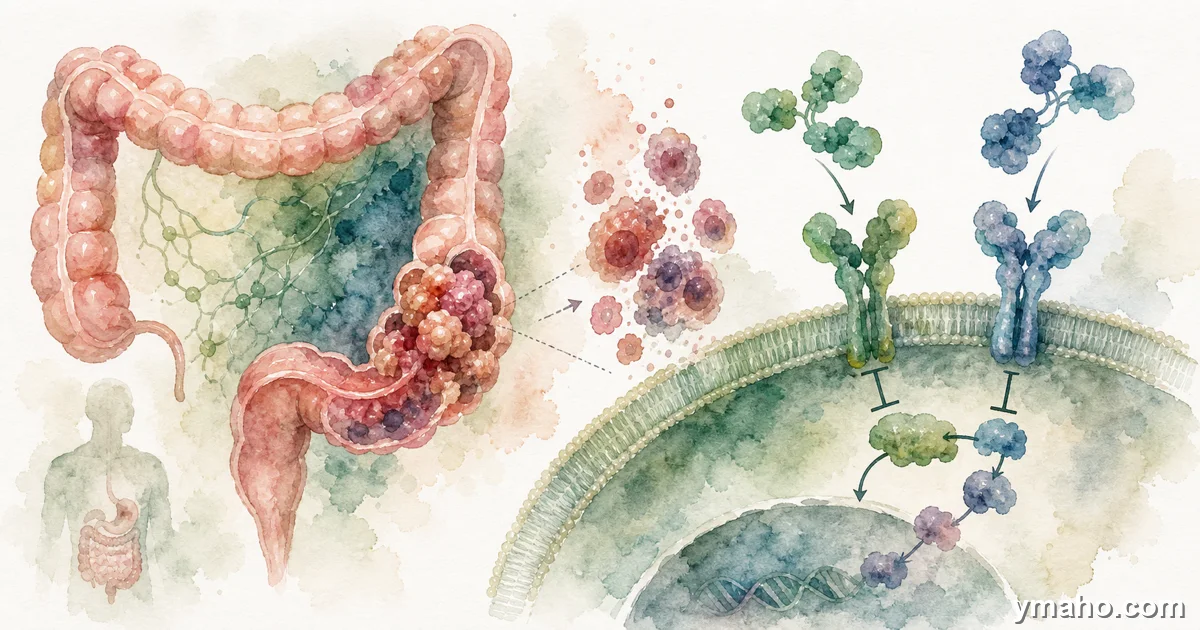
The European Medicines Agency (EMA) has recommended approval of the combination of encorafenib (Braftovi) with cetuximab and FOLFOX chemotherapy for the first-line treatment of BRAF V600E-mutant metastatic colorectal cancer. The recommendation is based on results from the BREAKWATER study, which showed a 47% reduction in the risk of progression.
Analytical Review: EMA Recommends Encorafenib + Cetuximab + FOLFOX for First-Line BRAF V600E-Mutant Colorectal Cancer
Analysis Date: May 29, 2026
[The Core]: What's Really Happening
On the surface, the EMA is finally catching up with the FDA. On May 27, 2026, the Committee for Medicinal Products for Human Use (CHMP) issued a positive opinion for the combination of encorafenib + cetuximab + mFOLFOX6 in the first-line treatment of BRAF V600E-mutant metastatic colorectal cancer (mCRC). A 47% reduction in the risk of progression, a 51% reduction in the risk of death. Median overall survival: 30.3 months versus 15.1 months in the control group.
But the real story here isn't about 15 extra months of life.
The BRAF V600E mutation occurs in 8-12% of patients with metastatic colorectal cancer. It's a small but clinically significant subgroup. Until now, the first-line standard for them was chemotherapy (FOLFOX or FOLFIRI with bevacizumab) with a median survival of about 12 months. Targeted therapy (encorafenib + cetuximab) was approved in the EU only for second and later lines based on the BEACON CRC study back in 2020.
The main non-obvious insight not found in press releases:
This is not about the triumph of targeted therapy per se. The BREAKWATER study includes three arms: A — encorafenib + cetuximab (without chemotherapy), B — encorafenib + cetuximab + mFOLFOX6, C — chemotherapy ± bevacizumab. Without chemotherapy, the efficacy of the double-targeted combination was inferior. The key takeaway: BRAF inhibitors do not replace chemotherapy in the first line; they enhance it. The patient still has to undergo oxaliplatin, fluorouracil, and leucovorin. Targeted therapy does not eliminate toxicity; it adds to it.
Timeline and Context
2020 — The European Commission approves encorafenib + cetuximab for the treatment of BRAF V600E-mutant mCRC in patients who have received prior systemic therapy.
December 2024 — The FDA grants accelerated approval for the combination of encorafenib + cetuximab + mFOLFOX6 for first-line use based on response rate data.
February 2026 — The FDA converts the approval to full approval after confirming clinical benefit in survival.
May 27, 2026 — CHMP issues a positive opinion for the EU.
Expected — European Commission decision within 2-3 months.
May 31, 2026 — Additional survival data from cohort 3 (encorafenib + cetuximab + FOLFIRI) are expected to be presented at ASCO 2026.
Key figures from BREAKWATER (data published in NEJM, presented at ASCO):
The study included 637 patients. Arm B (targeted therapy + chemotherapy, n=236) versus arm C (chemotherapy ± bevacizumab, n=243):
- Median progression-free survival: 12.8 months vs. 7.1 months (HR 0.53, p<0.001)
- Median overall survival (interim analysis): 30.3 months vs. 15.1 months (HR 0.49, p<0.001)
- Objective response rate (first 110 patients in each arm): 61% vs. 40% (p=0.0008)
- Objective response rate (full population): 65.7% vs. 37.4%
- Median duration of response: 13.9 months vs. 11.1 months
Grade 3-4 toxicity: 81.5% in the experimental arm vs. 66.8% in the control arm. Fatal adverse events (grade 5): 4.3% vs. 4.4%.
Who Wins and Who Loses
Absolute winner — Pierre Fabre Laboratories. The French pharmaceutical company holds the rights to encorafenib (Braftovi) in Europe. Previously, their drug was approved only for second-line use — a market 2-3 times smaller. Moving to first-line increases the potential patient pool from about 3,000 to 8,000-10,000 per year in Europe. At a treatment course cost of around €150,000-200,000 (based on the cost of BRAF/EGFR blockade in the US — about $250,000 for a full course), the annual revenue increase could be €300-500 million.
Winner — Pfizer. Pfizer holds the rights to encorafenib in the US and received full FDA approval in February 2026. Analysts estimate peak sales of Braftovi in mCRC at $600-800 million annually.
Winners — Patients with BRAF V600E-mutant mCRC. For them, the difference between 15 and 30 months of life with preserved quality of life (81.5% grade 3-4 toxicity is severe, but patients in the control group also had 66.8%) represents real and significant progress. Before BREAKWATER, no one had shown such a survival benefit in this subgroup.
Loser — Bevacizumab (Avastin, Roche/Biogen). In the BEACON CRC study for second-line, bevacizumab already lost to targeted therapy. In BREAKWATER, the control group included chemotherapy with or without bevacizumab — and still lost. Roche is losing market share in one of bevacizumab's key indications (sales volume in 2025: about $7 billion).
Non-obvious winner — Merck KGaA (not to be confused with Merck & Co). Cetuximab (Erbitux) is owned by Merck KGaA. The drug has been losing market share in recent years due to competition from bevacizumab and panitumumab. In combination with encorafenib and FOLFOX, it becomes an indispensable first-line component for 8-12% of patients. This extends the drug's commercial life by another 5-7 years.
Loser — Bristol-Myers Squibb. Their combination of nivolumab + ipilimumab is approved for MSI-high (microsatellite instability-high) colorectal cancers. But BRAF V600E-mutant tumors are MSS (microsatellite stable) in 70-80% of cases, meaning they do not respond to immunotherapy. The approval of encorafenib further narrows the potential audience for nivolumab in mCRC.
What the Media Isn't Saying
First and most important. The 30.3-month median overall survival figure is from an interim analysis. The upper bound of the confidence interval has not been reached (not estimable). This means that a significant portion of patients in the encorafenib + cetuximab + mFOLFOX6 group were still alive at the time of analysis. The actual median survival could end up higher than 30 months. But it could also "collapse" to 26-28 months in the final analysis if several patients with long follow-up progress simultaneously.
Second. The objective response rate of 65.7% is very high for colorectal cancer. But complete response (CR) — disappearance of all tumors — is achieved much less frequently. In NEJM publications, the complete response rate is typically 5-10%, not 65%. The difference between "tumor shrinkage" and "cure" is fundamental, but the media doesn't explain it.
Third. Grade 3-4 toxicity at 81.5% is extremely high. Grade 3-4 diarrhea, neutropenia, nausea, vomiting, rash — the patient spends a significant amount of time in the hospital, not at home. Doctors will actively reduce doses and skip cycles. In real-world clinical practice, efficacy will be lower than in the trial. None of Pierre Fabre's press releases mention this 81.5% figure — only a soft "safety profile was consistent with known data for each agent."
Fourth. The study did not compare the new combination with a sequential approach: first double-targeted therapy (encorafenib + cetuximab), then chemotherapy after progression. Such a design could have reduced early toxicity while preserving overall survival. But it was not tested. BREAKWATER is an "all at once" study (all chemotherapy plus all targeted therapy from day one). This gives the maximum benefit on paper, but the question of long-term tolerability remains open.
Fifth. No analyst is asking: what happens after progression on encorafenib + cetuximab + FOLFOX? The patient has already received oxaliplatin, fluorouracil, and targeted therapy. Subsequent lines are regorafenib or TAS-102 (trifluridine/tipiracil), whose efficacy after BRAF progression has not been studied. Median survival after progression in this study is not disclosed. There is a risk that patients live longer before progression (12.8 vs. 7.1 months), but after progression, they live the same or even less.
Forecast: Next 30 Days and 90 Days
30 days:
The main event is the presentation of full BREAKWATER data at ASCO 2026 on May 31, 2026. Key points I'll be watching:
- Data from cohort 3 (encorafenib + cetuximab + FOLFIRI) — if they show similar efficacy with less toxicity (FOLFIRI is better tolerated than FOLFOX), this will change clinical practice.
- Subgroup analysis by age (over 75) and ECOG status (1 vs. 0) — in whom does toxicity outweigh benefit.
- Complete response (CR) rate, not just objective (PR+CR).
Simultaneously, clinical guidelines will be updated. ESMO Living Guidelines have already included this combination as a first-line option. NCCN (US) will do the same within 30 days.
90 days:
The European Commission will issue a decision. With high probability, it will be positive, within 60-90 days after the CHMP recommendation. If the decision is delayed (unlikely for a priority oncology drug), investors will start to worry.
Price and reimbursement negotiations will begin in national health systems. The UK (NICE), Germany (G-BA), France (HAS), Italy (AIFA) — each country will bargain with Pierre Fabre. In Germany, the price will likely be close to the target (around €150,000 per course). In the UK, NICE may demand a 30-40% discount or restrict use to patients with ECOG 0.
Meanwhile, Pfizer (rights holder in the US) will launch an aggressive educational campaign for oncologists. The key message: "30 months of life — a new standard for BRAF-mutant mCRC." At conferences (ESMO GI, ASCO GI 2027), the first real-world data from outside clinical trials will appear.
Long-term forecast (2026-2028):
By the end of 2027, encorafenib + cetuximab + FOLFOX will become the first-line standard for BRAF V600E-mutant mCRC in all developed countries. The market share of this regimen in the BRAF-mutant subgroup will reach 70-80%. The remaining 20-30% will be patients who cannot tolerate the toxicity or who develop primary resistance (about 15-20% according to BREAKWATER).
The main unresolved issue is resistance. Mechanisms of acquired resistance to BRAF/EGFR blockade are already being studied, but the second line after progression on encorafenib remains a blank spot. This is a direction for future research: combinations with MEK inhibitors (binimetinib), with new BRAF degraders (PROTAC), with immunotherapy for the MSI-high subgroup.
And finally: don't expect this regimen to be approved for all patients with BRAF V600E mutation. There is an important difference between colorectal cancer and melanoma. In melanoma, a BRAF inhibitor works alone (vemurafenib, dabrafenib) — simply blocking BRAF is enough. In the colon, a BRAF inhibitor alone does not work — simultaneous blockade of EGFR (cetuximab) and chemotherapy is needed. BREAKWATER has definitively confirmed: BRAF V600E in colorectal cancer is not a "driver mutation" in the classic sense. It is a "permissive factor" that requires a combination of three agents to achieve an effect. And three agents mean three sources of toxicity and three sources of resistance. But for patients who previously had no options beyond chemotherapy, 30.3 months versus 15.1 is real, measurable progress. And that's what matters.
— Editorial Team