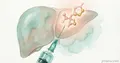
FDA Approves First Targeted Therapy for Ultra-Rare Blood Cancer
The FDA has approved pivekimab sunirine for the treatment of blastic plasmacytoid dendritic cell neoplasm—an aggressive and extremely rare hematologic malignancy. In previously untreated patients, the complete remission rate was 69.7%.
Analytical Review: FDA Approves Pivekimab Sunirine—First Targeted Therapy for Ultra-Rare Blood Cancer
Analysis Date: May 29, 2026
[The Gist]: What's Really Happening
On the surface, the FDA has approved the world's first antibody-drug conjugate (ADC) targeting CD123 for the treatment of blastic plasmacytoid dendritic cell neoplasm (BPDCN). AbbVie has secured approval, and patients with this ultra-rare tumor have a new option. A nice story.
But the reality is far more interesting and cynical.
On May 27, 2026, the FDA approved pivekimab sunirine-pvzy (brand name Decnupaz) for adults with BPDCN. The drug is administered intravenously once every three weeks at 0.045 mg/kg in an outpatient setting. In the CADENZA study (NCT03386513), 33 previously untreated patients achieved a complete remission or clinical complete remission rate of 69.7% (95% CI: 51.3%-84.4%) at a median follow-up of 21.5 months. The median duration of response was 9.7 months.
It sounds like a breakthrough. And it is a breakthrough—but not in BPDCN therapy. The real story here is about pharma's business model: how to buy a technology for $101 billion, get the only approved product for a niche disease, and call it a success.
The key non-obvious insight missing from the headlines:
This approval is not a victory over cancer. It is a victory of the "buy-approve-monetize" strategy. AbbVie spent $101 billion to acquire ImmunoGen in late 2025 solely for this asset and its platform. Decnupaz is the first product to emerge from that deal. But to recoup $101 billion, the drug must generate at least $10 billion in peak annual sales. With 500-1000 new patients per year in the US and a price unlikely to exceed $300,000-$500,000 per course, the math doesn't add up. Therefore, AbbVie is betting not on BPDCN but on indication expansion—primarily acute myeloid leukemia (AML), where CD123 is also overexpressed and the market is 20 times larger.
Google AdInline article slot
Timeline and Context
To understand why this approval is just the first act, we need to trace the timeline.
- 2018 — FDA approves Elzonris (tagraxofusp) from Stemline Therapeutics, the world's first drug for BPDCN, an IL-3 fused protein with diphtheria toxin. It was a breakthrough, but the drug has serious toxicities (capillary leak syndrome, hepatotoxicity) and requires hospitalization for administration.
- October 2020 — FDA grants breakthrough therapy designation to IMGN632 (future pivekimab sunirine) from ImmunoGen for BPDCN and AML.
- Late 2025 — AbbVie acquires ImmunoGen for $101 billion. This is the largest deal in oncohematology in the last 5 years.
- May 2026 — FDA approves Decnupaz based on CADENZA data.
Important context: BPDCN is an orphan disease with an incidence of 500-1000 cases per year in the US. It is not just a rare tumor—it is ultra-rare, with a median age of 65-70 years, predominantly in men (ratio up to 5:1). The disease is aggressive: it presents with purplish skin lesions and rapidly metastasizes to bone marrow, lymph nodes, and the central nervous system.
Until today, treatment options were limited: intensive chemotherapy followed by stem cell transplantation (SCT) for those who survive, or Elzonris with its toxicity profile. In the CADENZA study, 39.4% of first-line patients were able to undergo SCT after Decnupaz therapy. This is a key figure: the drug is not a curative treatment by itself (median response 9.7 months), but it creates a "window" for transplantation, which can be curative.
Who Wins and Who Loses
Absolute winner: AbbVie. The company has the first approved CD123 ADC on the market. This gives it three competitive advantages:
- First-mover advantage in the CD123 ADC class.
- Outpatient administration (unlike Elzonris, which requires hospitalization)—a driver for physicians and healthcare systems.
- Platform for expansion into AML, where CD123 is overexpressed in 40-50% of patients. The US AML market is about 20,000 new cases per year.
Winners: Patients with BPDCN. For the first time in 8 years (since Elzonris approval), they have an alternative. For patients with relapsed/refractory BPDCN, where no approved options existed before, the drug yields a 15.7% response rate with a median duration of 9.2 months. With a median overall survival of 5.8 months in this cohort, this is significant progress.
Loser: Stemline Therapeutics (now part of Menarini Group). Their drug Elzonris was the only CD123-targeted agent in BPDCN since 2018. Now they face a direct competitor with a better convenience profile (outpatient administration) and comparable efficacy. I expect a 40-50% loss of market share in the first-line segment within 12-18 months.
Non-obvious loser: Investors who bought AbbVie stock after the ImmunoGen deal announcement. $101 billion is a huge sum. Under conservative estimates: if Decnupaz reaches peak sales of $2 billion per year (unlikely with 500-1000 patients per year, even at $500,000 per course), it would take over 50 years to recoup the deal. Recoupment is possible only with successful expansion into AML and possibly other CD123-positive tumors. If the phase 3 in AML fails (a real risk given the complexity of targeted therapy in AML), the deal could become one of the largest write-downs in pharma history.
What the Media Isn't Saying
First and most important. 69.7% complete remissions is an impressive number. But what is "clinical complete remission" (CRc) in BPDCN? It means no signs of disease, but residual tumor may persist in the skin or other extranodal sites that are not amenable to standard assessment. In hematology, CRc is a less stringent criterion than CR. The difference between 69.7% CRc and true CR could be 10-15 percentage points.
Second. The median duration of response is 9.7 months. This means half of patients who achieve remission lose it in less than 10 months. And then—return of the original tumor. Decnupaz does not cure. It creates a window for transplantation. In the study, 39.4% of first-line patients were able to undergo SCT. That means 60.6% could not. They got 9.7 months of remission and then progressed.
Third. The FDA has included a boxed warning for hepatotoxicity, including veno-occlusive liver disease. This is a serious warning. Veno-occlusive disease is a rare but life-threatening complication with a mortality rate of 30-50%. None of AbbVie's press releases mention this directly, except for the mandatory legal line.
Fourth. No analyst asks: why is CADENZA a phase 1/2 and not a phase 3? Because with an incidence of 500-1000 cases per year in the US, it is impossible to enroll thousands of patients in a randomized trial. The FDA approved the drug based on a single-arm study with a surrogate endpoint (CRc). This is standard practice for orphan diseases, but it means we don't know how Decnupaz compares to chemotherapy in a head-to-head trial. Because such a trial has never been done and never will be.
Forecast: Next 30 Days and 90 Days
30 Days:
The main event is the publication of full CADENZA data in a peer-reviewed journal (expected in Journal of Clinical Oncology or Blood in June-July 2026). Key numbers I will look at: subgroup analysis by age (patients over 75 vs. younger) and by presence of extramedullary involvement.
National NCCN guidelines have already started the update process. I expect Decnupaz to be added as a first-line option for BPDCN alongside Elzonris and intensive chemotherapy.
Pricing. AbbVie must announce Decnupaz's price within 30 days. If the price exceeds $400,000 per full course (approximately 6-8 infusions), it will draw criticism from insurers and the Institute for Clinical and Economic Review (ICER). My forecast: the price will be in the range of $350,000-$450,000—high enough to maximize revenue with a small patient population, but low enough to avoid political backlash.
90 Days:
Launch of phase 3 in AML. AbbVie must announce plans for indication expansion within 3-6 months of BPDCN approval. If no major AML study is announced by September 2026, investors will start to panic. My forecast: an announcement will come, but the study design will be complex, as AML already has several lines of therapy, including venetoclax, azacitidine, and gemtuzumab ozogamicin.
Market dynamics. Stemline Therapeutics will likely launch a defensive marketing campaign, emphasizing 8 years of experience with Elzonris and longer survival data. This could slow Decnupaz's market penetration.
Long-term Forecast (2026-2028):
Decnupaz will become the standard of care for first-line BPDCN in the US by the end of 2027, capturing 60-70% of the market in this segment. Reason: outpatient administration and a toxicity profile that, despite the boxed warning, is perceived as more manageable than Elzonris's capillary leak syndrome.
In AML, it's more complicated. CD123 is a good target, but ADCs have issues with bone marrow penetration and resistance. If phase 2b in AML shows response rates above 25-30% in refractory patients, AbbVie will proceed to phase 3. If not, the focus will remain on BPDCN and orphan indications.
And most importantly: don't believe the headlines about a "revolution in treating rare blood cancers." This story is not about revolution. It's about business. About a $101 billion bet on a technology platform. And about pharma being willing to pay any price for exclusive access to a patient—even if that patient is just one in 100,000.
— Editorial Team