Largest AI Diagnostic Approval for Chromosome Analysis in IVF
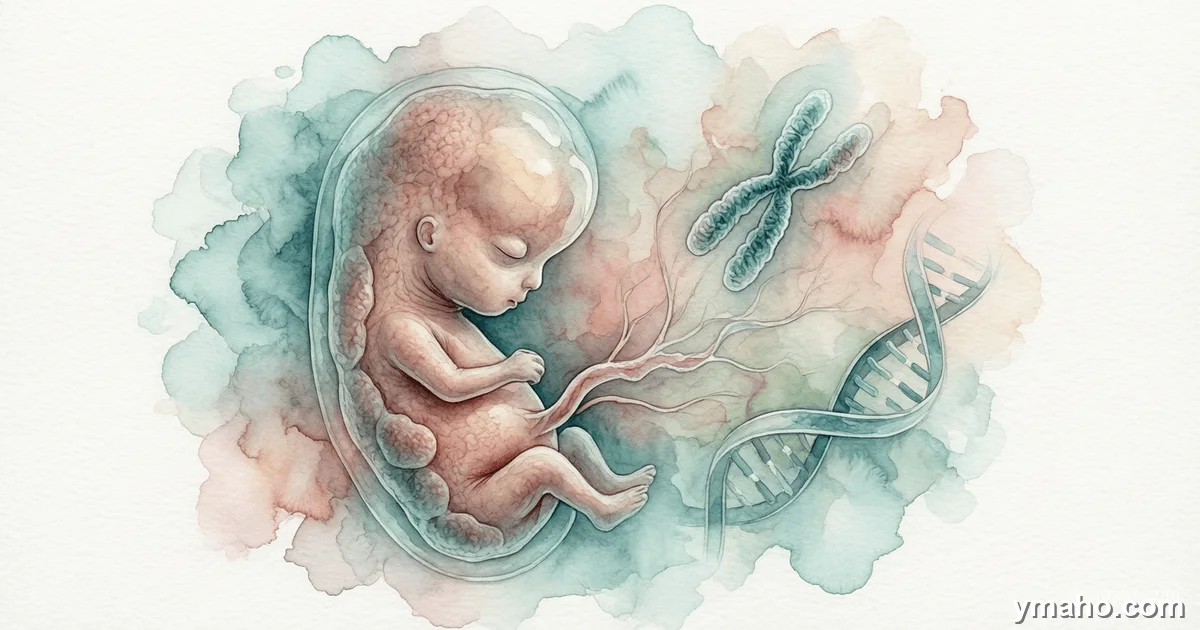
China's National Medical Products Administration (NMPA) has granted Class III registration to the Diagens AI AutoVision® system — the world's first AI-based software for karyotype analysis in the prevention of birth defects. The algorithm reduced analysis time from 34 to 11 minutes while maintaining accuracy above 99%.
Analytical Review: Largest AI Diagnostic Approval for Chromosome Analysis in IVF
Analysis Date: May 29, 2026
[The Gist]: What's Really Happening
On the surface, a Hangzhou-based company received Chinese registration for an AI system for karyotype analysis. Speed tripled, accuracy above 99%. Another story about AI speeding up routine tasks.
But the real story is deeper and more interesting.
On May 22, 2026, China's NMPA granted Class III registration to the Diagens AI AutoVision® system — the world's first AI-based software for karyotype analysis with anomaly detection. The system is built on the iMedImage® foundation model with 104 billion parameters, supporting 19 medical imaging modalities.
But here's what's not making headlines.
The key non-obvious insight missing from press releases:
This approval is not about karyotyping. It is the world's first precedent of regulatory validation of a foundation model in medical imaging. The decade of AI in medicine was a story of "one task, one model." The next decade will be a story of "one model, hundreds of tasks." Diagens just received permission to deploy this new paradigm. The certification cost for the next 92 models the company has already developed for 32 organs and 64 diseases will now be an order of magnitude lower.
Timeline and Context
To understand why this event matters not just for China but for the whole world, we need to trace the technological evolution.
2019: Diagens, together with Shanghai Jiao Tong University, publishes a paper in IEEE Transactions on Medical Imaging (impact factor 10.6) on Varifocal-Net — the first deep neural network for chromosome classification. The algorithm raised identification accuracy from the traditional 50-60% to 99.2%.
2020-2024: The reproductive genetics market grows from $7.9 billion in 2025 to a projected $16.2 billion by 2030 (CAGR 15.4%). The preimplantation genetic testing market — a separate segment of $660 million in 2025 — grows at 8.3% annually.
May 2025: Diagens receives "innovative medical device" status from NMPA ("green channel"), shortening the path to registration.
May 22, 2026: Historic Class III approval. Why "historic"?
Class III is the highest level of medical device regulation in China, requiring multicenter clinical trials and certification cycles of several years. Diagens conducted a prospective multicenter study on 1,734 cases — one of the largest in the world for AI karyotyping.
Results that convinced the regulator:
- Sensitivity and specificity for numerical anomalies: 100%
- Sensitivity for structural anomalies: 94.31%, specificity: 100%
- Analysis time per case: from 34.42 minutes to 11.19 minutes
- Report turnaround time: from 30 days to 4-7 days
- Automated analysis accuracy: over 99%
Compare with competitors. The American company BioView with its SoloWeb/CytoCloud has been on the market for several years, but in the US the product is sold only "for research purposes," not for clinical diagnostics. Technical limitations: works only with G-banding (one type of chromosome staining), does not support active analysis of metaphase images from third-party manufacturers. Diagens, in contrast, supports G- and R-banding, works with amniotic fluid (prenatal diagnostics) and peripheral blood (assisted reproduction).
Who Wins and Who Loses
Absolute winner: Diagens. The company has just built a regulatory fortress that competitors will need 2-3 years to storm. During these years, Diagens aims to dominate the Chinese market (over 400 medical institutions already use their products, market share in karyotyping segment is first in China).
Financial results are already visible. Diagens' revenue for 2025 was approximately 164 million yuan (about $22.6 million at current exchange rate), up 134% year-on-year. Technology licensing revenues reached 84.3 million yuan, soaring 331.7%, and for the first time became the company's largest revenue source (over 50%). This is not "selling devices." It is "selling capabilities."
Winner: The IVF and prenatal diagnostics market in China. The shortage of qualified cytogeneticists is a structural problem in global healthcare. Training one specialist takes 3-5 years. AI AutoVision reduces the need for manual labor by 99.5% in terms of human-machine interaction. For a healthcare system with 1.4 billion people and growing demand for IVF (assisted reproductive technologies), this is not just an improvement — it is the only scalable path.
Loser: Western karyotyping equipment manufacturers (Applied Spectral Imaging, MetaSystems). Their business model is built on selling expensive scanning systems and software with manual or semi-automated analysis. Diagens offers a fully integrated solution: MetaSight scanner (200-slide capacity) + AI AutoVision + cloud platform. The Chinese market is now virtually closed to them. The question is when Diagens will enter Southeast Asian, Middle Eastern, and Latin American markets with aggressive pricing.
Non-obvious loser: Natera, Illumina, and other companies investing in NGS for preimplantation genetic testing. Sequencing-based PGT-A costs $2,500-4,000 per cycle in the US, and PGT-M costs $7,000-12,000. AI karyotyping is an order of magnitude cheaper (Diagens does not disclose the price, but similar tests in China cost $200-500). If AI karyotyping shows comparable or better clinical efficacy in detecting aneuploidies (and 100% sensitivity in clinical trials hints at that), the economics will tilt toward AI. Illumina has invested billions in NGS for reproductive genetics. Diagens just offered an alternative that does not require expensive sequencers, consumables, or bioinformaticians.
What the Media Isn't Saying
First and most important. 100% sensitivity and specificity for numerical anomalies are ideal figures achieved on a test sample. In real clinical practice, with varying slide quality, different banding types, and different scanners, the numbers will be lower. The question is how much. A study on 1,734 cases is a solid volume, but not representative of all 1.4 billion people in China.
Second. The claim "automated analysis with accuracy over 99%" requires clarification. The trial protocol states: 100% for numerical anomalies, 94.31% for structural ones. Structural anomalies (translocations, deletions, duplications) are the complex cases for which patients see geneticists. 5.7% missed structural anomalies in screening mode is unacceptably high. That's why the system is called "AI automated analysis + physician verification," not "AI replaces the doctor."
Third. Diagens is a Hangzhou-based company with Chinese investors and a Chinese market. NMPA approval has no force outside China. Entering US and European markets will require separate studies and FDA (510(k) or De Novo) and CE-MDR certification. That means years of work and millions of dollars. Investors who see this as a "global breakthrough" may be disappointed when they realize that clinics in Boston or London won't see this system before 2028-2029.
Fourth. The system works only with Diagens' own MetaSight scanner — a proprietary device that loads 200 slides per cycle. This is a classic "razor and blades" strategy: sell the scanner (entry point), then license AI analysis (recurring revenue). Hospitals that have already invested in other manufacturers' equipment cannot use AI AutoVision without a full fleet replacement. This is either a huge barrier to entry or, with the right pricing strategy, a powerful driver of scanner sales.
Forecast: Next 30 Days and 90 Days
30 days:
Diagens will conduct a series of roadshows for investors, explaining why the company's stock (code 2526 on the Hong Kong Stock Exchange) should rise. Following the approval announcement on May 22, shares rose 3.15%. I expect further growth of 10-15% in June if the company announces first major contracts with public hospital networks.
The key question analysts will ask: what is the actual price per test and what is the margin? If Diagens can maintain a price of 300-500 yuan per test with AI analysis costing pennies (electricity + server depreciation), margins will be astronomical.
90 days:
The main event: announcement of entry into Southeast Asian markets. Does Diagens already have distribution networks in Singapore, Malaysia, and Thailand? If so, registration dossiers for these countries could be submitted within 3-6 months. Thailand and Vietnam are large medical tourism markets for IVF. The arrival of AI karyotyping there could reshape the competitive landscape.
Second: response from Western competitors. I expect that by August-September, Applied Spectral Imaging or MetaSystems will announce their own AI solutions "with FDA/CE approval within 12 months." The question is whether they can match Diagens on algorithm quality (94.31% sensitivity for structural anomalies is a very high bar) and price.
Long-term forecast (2026-2028):
AI AutoVision will become the de facto standard for karyotyping in China by the end of 2027. Diagens' share of the Chinese cytogenetics market will grow from the current 30-40% to 70-80%. This will be followed by expansion into developing markets (Southeast Asia, Middle East, Latin America) with a pricing strategy of "significantly cheaper than Western alternatives."
In the US and Europe, it's a different story. FDA and EMA will require local clinical trials on local populations and validation on different equipment types. This will take years. But if Diagens finds a strong partner (e.g., Roche or Siemens Healthineers) for distribution and regulatory support, entry into Western markets could accelerate to 2029-2030.
And most importantly: don't believe the headlines about a "breakthrough in diagnostics." The technology is indeed groundbreaking. But the real revolution is not in the speed of chromosome analysis. It is that a regulator said "yes" to a foundation model in medicine for the first time. The next 92 Diagens models for 32 organs and 64 diseases are not theory. They are a product line already in development. And the path to market for them is now many times shorter.
— Editorial Team