Weekly Inflation in Russia at 0.07%, Annual Rate Reaches 5.48%
According to Rosstat data as of May 25, 2026, inflation in Russia for the week of May 19–25 was 0.07%, while annual inflation rose to 5.48% from 5.47% a week earlier.
Headline: Inflation at 5.48%: Why the Central Bank and the Ministry of Economic Development See Different Realities, and What Will Happen to the Key Rate
Author: Independent Financial Analyst (Insider Perspective)
[The Gist]: What Is Really Happening
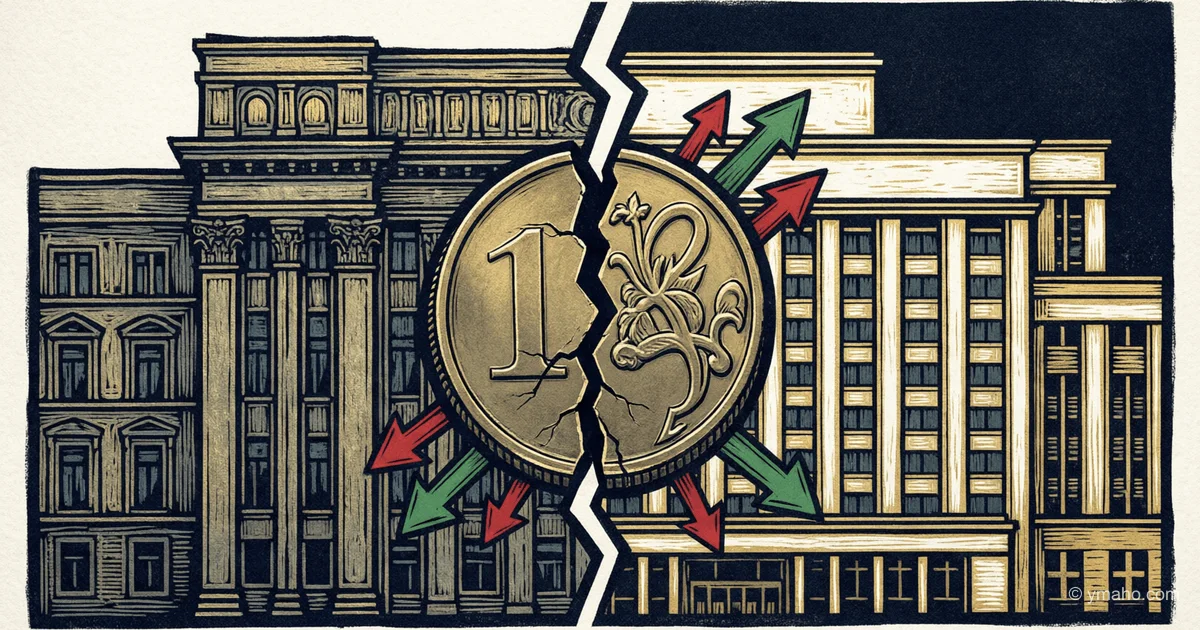
Rosstat published inflation data for the week of May 19–25, 2026: prices rose by 0.07%, and annual inflation reached 5.48%. Meanwhile, the Ministry of Economic Development estimated annual inflation for the same date at 5.33%. The 0.15 percentage point gap is not a technical error but a methodological divide between the two agencies, which has enormous implications for key rate forecasts.
The point is not the numbers. The point is that the Central Bank uses one calculation method (weekly dynamics yielding 5.48%), while the Ministry of Economic Development uses another (average daily data for May 2025 yielding 5.33%). Why does this matter? Because on June 18, the Central Bank will hold a meeting on the key rate. If you look at the Ministry's numbers, inflation is slowing, so the rate could be cut. If you trust the Central Bank's own methodology, inflation accelerated from 5.47% to 5.48% over the week, and a rate cut is off the table.
The real insight: this methodological fork is no coincidence. It reflects a hidden struggle between the Ministry of Finance/Ministry of Economic Development (which need a rate cut to service government debt and stimulate growth) and the Central Bank (which fears stoking inflation).
Timeline and Context
Late April 2026. Annual inflation, according to Rosstat, stood at 5.58%. Against the backdrop of slowing monthly inflation (April: 0.14% after 0.6% in March), the Central Bank cut the key rate to 14.5%.
May 5–12, 2026. Weekly inflation was 0.07%, annual at 5.47% by the Central Bank's method and 5.55% by average daily data.
May 13–18, 2026. For the first time since the start of the year, deflation was recorded — minus 0.02% for the week. Annual inflation by the Central Bank's method fell to 5.36%.
May 19–25, 2026. Inflation turned positive again — 0.07%. Annual inflation by the Central Bank's method rose to 5.48%, while by the Ministry's method it fell to 5.33%.
What happened during this week? Food products continued to decline (minus 0.07%), especially fruits and vegetables (minus 0.11%). Tomatoes fell by 3.6%, eggs by 2.2%, butter by 0.4%. But non-food goods rose by 0.1%, and services by 0.24%. It is the rise in service prices (where annual inflation remains around 10%, according to analysts) that prevents annual inflation from falling as fast as the Ministry of Economic Development would like.
Who Wins and Who Loses
The obvious winners: buyers of fruits and vegetables. Cucumbers and tomatoes, which were exorbitantly priced in April due to seasonal factors, are finally coming down.
But there is also a less obvious winner: the Ministry of Finance, which needs grounds for further key rate cuts. The lower the official inflation, the easier it is to pressure the Central Bank. That is why the Ministry of Economic Development publishes its methodology showing 5.33% rather than 5.48%. This is not manipulation — it is a legitimate choice of methodology. But it is politically biased.
Losers: holders of ruble savings and fixed-coupon bonds. Because if inflation is not declining (and by the Central Bank's method, it even rose by 0.01 pp over the week), the real yield on deposits and bonds remains negative or near zero.
The main loser: borrowers with floating rates. Because uncertainty about inflation means uncertainty about the Central Bank's rate. And the higher the uncertainty, the more risk premium banks embed in loan agreements.
What the Media Isn't Saying
The first and most important insight missing from the news: the 0.15 pp gap between the Central Bank's and the Ministry's methodologies is not a technical detail but a political bomb.
Why? Because the Central Bank's inflation target is 4% by 2027. If inflation on May 25, 2026, is already 5.48% (by the Central Bank's method) and shows no sign of slowing toward 4%, then the Central Bank has no grounds for a rate cut. But if it is 5.33% (by the Ministry's method) and slowing (a week earlier it was 5.36%), then grounds exist.
Who is right? Technically, both. The Ministry is right because its method is based on average daily data for May 2025 and correctly accounts for the high base effect from last year. The Central Bank is right because its method (weekly dynamics projected annually) is more sensitive to current changes and better suited for operational response.
But what matters for the market is this: the Central Bank will make its decision based on its own methodology. And according to that, inflation rose over the week. This means that on June 18, the rate will most likely be left unchanged at 14.5%.
The second point being ignored: a tectonic shift has occurred in the structure of inflation.
Previously, the main driver of price growth was food. Now food has been declining for three consecutive months. Non-food goods are rising at minimal rates (0.1% per week). But services are rising rapidly (0.24% per week) and have annual inflation of around 10%.
This is a classic picture of an economy where consumer demand shifts from goods to services after a period of high inflation. People have already bought everything they could and are now spending on leisure, repairs, and education. But this means that the Central Bank's traditional measures (raising rates to cool demand for goods) are less effective because services are less sensitive to rates.
The third overlooked insight: the historical precedent of September 2022 shows that the Ministry's methodology can be dangerous for trust in statistics.
In September 2022, the Ministry of Economic Development recalculated inflation for previous months, and it "suddenly" turned out to be 0.3–0.5 pp lower. This sparked a wave of criticism from independent economists, who accused the agency of data manipulation for political purposes. Now history is repeating itself: on the eve of the Central Bank meeting, the Ministry publishes a more optimistic estimate. Coincidence? Possibly. But professionals remember 2022.
Forecast: Next 30 Days and 90 Days
30 days: The key event is the Central Bank meeting on June 18. Our baseline scenario: the rate remains at 14.5%. Reason: inflation by the Central Bank's method is not declining, and services continue to rise at an annual rate of 9–10%. If overall May inflation (Rosstat data due June 10) comes in below 0.2% (consensus forecast: 0.14–0.17%), the probability of a rate cut rises to 35–40%. If above 0.2%, the probability drops to 10–15%.
May inflation, in our estimate, will be 0.15–0.18% — slightly above April's 0.14%, but still within seasonal norms.
90 days: By August, the situation will become clearer. Optimistic scenario (40%): fruit and vegetable deflation continues, services begin to slow (high base effect from summer 2025, when there was a spike in tour and airfare prices), and annual inflation by the Central Bank's method falls to 5.1–5.2%. Then the Central Bank could cut the rate to 14% in July–August.
Pessimistic scenario (60%): the effect of ruble strengthening (April–May) fades, imports become more expensive due to persistent logistics problems, and services continue to rise at 0.3–0.4% per week (yielding annual inflation of 15–20% in this segment). Then annual inflation by the Central Bank's method stays in the 5.4–5.6% range, and the Central Bank will not cut the rate at least until September.
Editorial Forecast
Based on current data, we believe that over the next 24–72 hours, the market reaction to the inflation statistics will be subdued but with a bias toward ruble strengthening. We expect the dollar-to-ruble exchange rate to test the 75.5–76.5 ruble level — the lower boundary of the corridor established after the April strengthening. Confidence level: medium, as geopolitical news could override domestic statistics. The main risk: if Friday, May 29, brings weekly inflation data above 0.1%, the market will price in a Central Bank rate hike, and the ruble will reverse upward to 78–79. This is the editorial opinion, not an investment recommendation.
— Editorial Team