Fed Still Undecided on June Rate Decision
Fed Vice Chair Philip Jefferson said he has not yet made a final decision on the outcome of the June FOMC meeting, leaving the future of monetary policy uncertain.
Analytical article: Behind the Scenes of Fed Indecision — Why a "Pause" Is More Dangerous Than a Rate Hike
Philip Jefferson's statement that he is "still undecided" on the June rate decision is not so much a sign of FOMC democracy as a diplomatic way to hide the growing civil war within the Committee. Inside the industry, we know: when a vice chair publicly expresses uncertainty 19 days before a meeting, it means that macroeconomic scenario modeling shows a catastrophic range of outcomes.
This is not a "pause" in the usual sense of 1995 or 2006. It is a crisis of legitimacy for the model the Fed has lived by for the past two years.
[The Gist]: What's Really Happening
Jefferson did not drop this phrase by accident. Behind it lies simple math: to change the median dot plot forecast, it takes a shift in the positions of just THREE FOMC officials. The market is already pricing in nearly a 70% probability of a rate hike by December 2026, with 43% of that probability assigned to the December meeting itself.
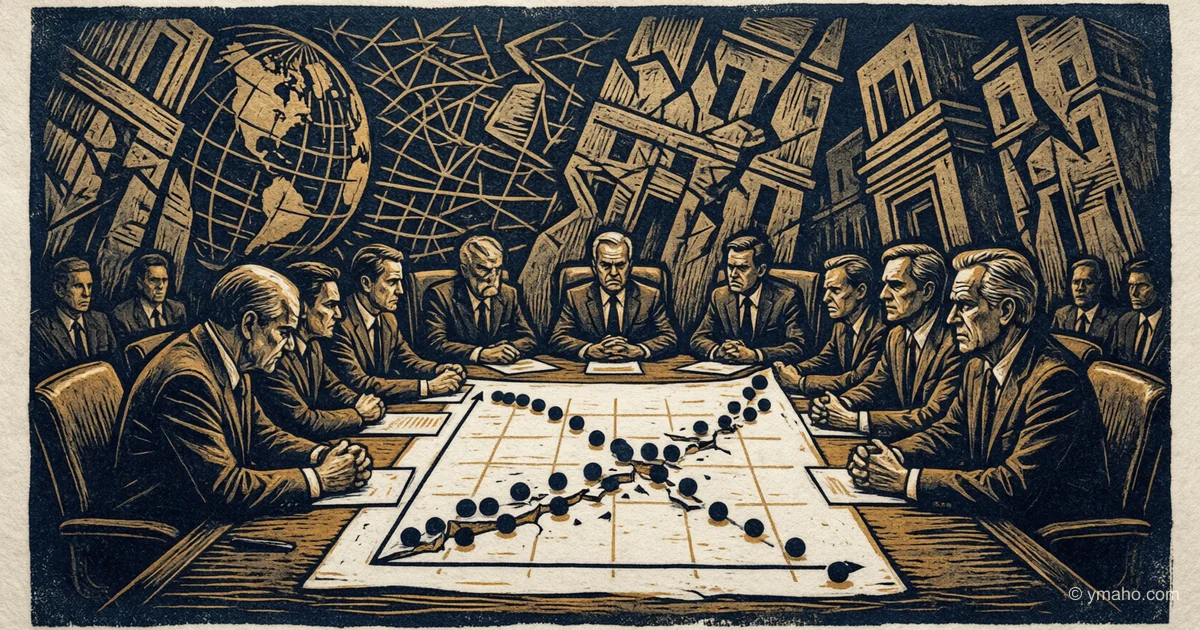
But the real drama is in the personnel changes. Kevin Warsh, who took office as Chair just a few weeks ago, will hold his first "live" meeting in June. Warsh is a veteran of the 2008 crisis and a critic of quantitative easing. He will not stand in the way of hawks, but he will also be unable to consolidate votes for a cut. As a result, the Committee is frozen in functional paralysis: votes are split evenly between the "immediate hike" camp (Waller, most reserve bank presidents) and the "transactional pause" camp (those afraid of killing the labor market).
Timeline and Context
We have a unique situation: over the past 18 months, the market has gone from expecting three rounds of easing in 2026 to currently almost completely denying any cuts. Key dates are already set:
- April 2026: FOMC notes that "many" participants are ready to drop the dovish tone in the statement.
- May 20, 2026: DXY falls to a local bottom of 99.14 — from this point, the dollar began to recover on geopolitics.
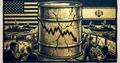
- May 27, 2026 (yesterday): The 10-year UST benchmark rises 5 basis points to 4.53% after US strikes on Iran. Brent crude oil futures jump 4.2% — above USD 98 per barrel.
- May 28, 2026 (today): Jefferson's statement.
Between these points lies the war in Iran, which has been going on for nearly three months. Jefferson directly stated that he is monitoring how rising energy prices are "eating into" consumer spending. This is a key indicator: Brent sustainably above USD 100 per barrel will automatically mean postponing a rate hike to June or July.
Who Wins and Who Loses
Winners: Short positions on long Treasuries. Yesterday's yield increase of 30 basis points on 2-year notes (to 4.07%) and 25 basis points on 5-year notes is a classic "bear steepener." Large hedge funds have been building shorts through ETFs TBF and TBT for a week. Also winning are banks with floating rates, whose NIM (net interest margin) cushion has suddenly stopped shrinking.
Losers: Issuers of BBB-rated corporate bonds that planned refinancing in the third quarter. Spreads have already started widening: default risk for high-yield bonds is sensitive to any pause longer than 6 months. Also losing is the US Treasury: servicing USD 36 trillion in debt at a 4.5% rate costs an additional USD 150 billion per year compared to the expected 3.75%.
What the Media Isn't Saying
Insight #1 — "Warsh's Secret Deal with the White House." The public sphere ignores that President Trump has been demanding rate cuts since the start of his second term. But Warsh is a protégé of the Republican financial elite (former advisor to George W. Bush). In closed meetings in late April, he made it clear: he will not raise rates BEFORE the midterm elections in November 2026, but he will not cut them either, to avoid triggering a dollar collapse. The current "indecision" is a smokescreen behind which Warsh is gathering votes for a compromise: a 25-basis-point rate hike in December, but with a clear signal that it is a one-off action against war-driven inflation.
Insight #2 — Inflation Has Spun Out of Model Control. Classic Fed models (PCE core, Friedman index) are not working because current inflation is hybrid. 40% of price growth comes from the Persian Gulf war (logistics + oil), 30% from the fiscal impulse of defense orders, and only 30% from domestic demand. When Jefferson says "risks to inflation are tilted to the upside," he means that even if oil falls to USD 80, defense contracts with Iran (or rather, reconstruction costs) will keep CPI at 3.2-3.5% through year-end.
Forecast: Next 30 Days and 90 Days
30 days: The probability of a rate hike at the June meeting is 12% (an exceptional scenario if Brent settles above USD 105). The base case (80% probability) is the rate unchanged at 3.5-3.75%, but with the removal of the phrase "patient" from the statement (killing the dovish tone). 10-year USTs will move to 4.65-4.70%. DXY will break resistance at 99.54 and move to 100.30 on expectations of a December hike.
90 days: The peak of geopolitical tension will come in August-September (heat + shipping restrictions in Hormuz). If Congress approves a new USD 35 billion military aid package for Israel, oil could surge to USD 110. In this scenario, the Fed would be forced to raise rates BEFORE the elections — at the September 16 meeting. This would trigger a collapse in high-yield bonds and a sharp slowdown in the US mortgage market (the 30-year rate would jump from the current 6.8% to 8.2-8.5%). But the base forecast from TD Securities (pause until 2027) still dominates, as Warsh will not commit political suicide.
Editorial Forecast
Asset: DXY (US Dollar Index). Direction — up in the next 48 hours. The break of resistance at 99.54 is technically confirmed by a close above 99.30 after Jefferson's statement. Target: 99.80–100.10. Confidence level — medium (65%). Main risk: a breakthrough in Iran peace talks (if Tehran and Washington suddenly announce a temporary nuclear agreement, DXY would crash back to 98.80).
— Editorial Team