Korea Launches the Trend for 'Chiseled' Muscles: From Glass Skin to Athletic Aesthetics
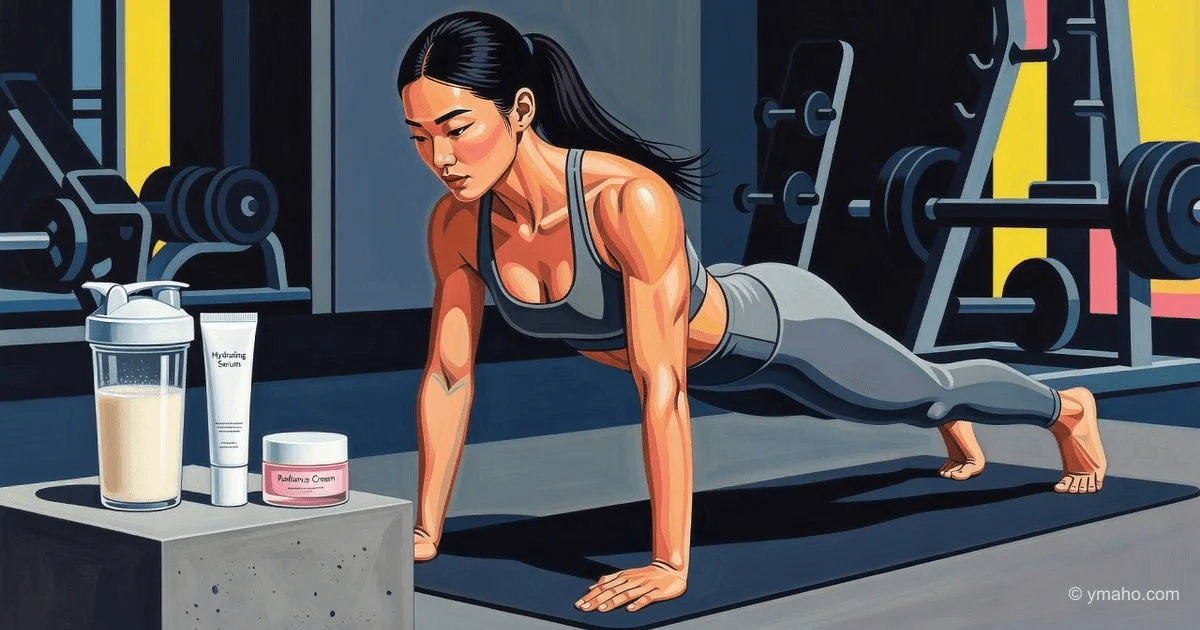
The shift from the 'glass skin' trend to 'hard body' (athletic, defined physique) on social media has sparked a boom in functional nutrition high in protein and collagen for tendons. Simultaneously, the 'nail care' direction is developing—special attention to bone and ligament health among young teenage girls engaged in fitness.
Korea Launches the Trend for 'Chiseled' Muscles: How 'Hard Body' Kills 'Glass Skin' and Reshapes the Nutraceutical Market
The Essence: What's Really Happening
At first glance, the shift from 'glass skin' to 'athletic, defined body' is just another turn of the aesthetic preference wheel on social media. But in reality, we are witnessing a fundamental shift in how Korean consumers (and, following them, the Asian market as a whole) define 'beauty' and 'health.' Previously, the ideal was a face that shines like polished glass; now, the focus shifts to a body that demonstrates strength, discipline, and functionality.
What does this mean for the industry? The Korean sports supplements and nutraceuticals market, valued at $112.92 million in 2025, is projected to grow to $257.7 million by 2034, with a CAGR of 9.6%. And this is not organic growth from 'health nuts.' It is a direct response to an aesthetic demand: girls don't just want to lose weight; they want to build definition—and for that, they need protein, collagen, and specialized supplements.
But the key insight goes deeper. The shift in aesthetics is a shift in philosophy: from passive beauty ('skin shines on its own if you care for it properly') to active beauty ('definition must be built; it requires effort and money'). And this opens up monetization where there was none before: fitness apps, sports nutrition, bone and ligament supplements, functional beverages. Glass skin required creams and serums. Hard body requires protein and collagen.
Timeline and Context
The trajectory of this trend can be traced through analytics from leading Korean platforms. CJ Olive Young, Korea's largest beauty retailer, used the abbreviation 'fullmoon' in its '2026 Trend Keywords' report as a metaphor for 'wholeness'—a concept that unifies beauty and wellness into a single consumer journey. A key sub-trend is 'early wellness': teenagers and young people aged 15-24 are proactively engaging in health (sleep, stress, skin) rather than reactively.
What does this mean in numbers? Olive Young has recorded double-digit annual growth in wellness product consumption among this age group since 2022. Sales of sleep supplements have grown by over 300%. It's not 'grandmas' taking melatonin—it's 20-year-old girls preparing their bodies for exertion.
Meanwhile, the collagen market, historically 'female' and 'anti-aging,' is repositioning. The Korean collagen peptide market is growing driven by two factors: joint health and fitness nutrition. Marine collagen, previously sold as an 'ingredient for glowing skin,' is now positioned for 'bone and tendon health.' Type 1 collagen, dominant in this segment, is advertised as a means to accelerate injury healing and increase ligament flexibility—a direct response to the demands of an actively training audience.
June 2026 marks a synchronization point. Analysts report that the Korean bone and joint health supplements market grew from $34.26 million in 2025 to a projected $58.1 million by 2034 (CAGR 6.04%), with collagen dominating and calcium growing fastest. This is 'nail care'—a term describing attention to 'hard' tissues (bones, ligaments, cartilage) that were previously beyond the beauty industry's scope.
Who Wins and Who Loses
Absolute winner—the sports nutrition category in Korea. The B2B sports nutrition market, including supplies to fitness clubs, corporate wellness programs, and sports teams, is on the rise. Protein supplements are the largest segment, but vitamins and minerals, as well as pre/post-workout nutrition, are showing faster growth. Brands that can repackage protein as 'beauty from within' (pink jars, collaborations with fitness influencers) will win twice over.
Winner—the marine collagen market. Korea is a global leader in fish collagen innovation, and the 'hard body' trend pushes brands to create products targeting athletes and active young women. Type 1 collagen from fish skin and scales is the ideal molecule: high bioavailability, an eco-friendly narrative, and clinically proven effects on bone density and tendon strength.
Winner—retail. Olive Young, which has already restructured its shelves around 'wellness as integration,' sells vitamin-fortified products across all categories—from skincare to supplements and functional beverages. When a consumer buys a protein bar next to a facial serum, the average ticket rises. This is no accident: the 'fullmoon' concept literally sells off the shelf.
Who is at risk? Pure 'beauty-only' brands that lack a supplement or sports nutrition line. Their consumer, aged 25-35, who yesterday bought a 12-step Korean skincare routine, today spends her budget on a gym membership and collagen sticks. If a beauty brand cannot offer her 'beauty for the body,' she leaves for competitors who can.
Losers—traditional anti-aging brands targeting women 45+. Their audience is not 'hard body' but 'healthy aging.' The problem is that youth (who set trends) do not buy their products. And 'early wellness,' as Olive Young writes, means these young people will not start using anti-aging creams at 40—because they will be 'longevity' consumers with a completely different set of products: collagen, adaptogens, functional nutrition.
Unobvious winner—the state. The South Korean government passed the 'Healing Tourism Industry Act,' which designates 20 premium wellness locations, including high-tech beauty spas, hydrotherapy programs, and traditional medicine centers. Subsidies of up to $36,300 per facility aim to attract foreign tourists who want to combine fitness, treatments, and shopping. This is direct investment in the wellness economy—and the 'hard body' trend fits perfectly into this strategy.
What the Media Aren't Saying
First unobvious insight: the 'hard body' trend is a reaction to fatigue from the unattainable 'glass skin' standard. Glass skin requires perfect texture, zero pores, flawless tone. It is a standard unattainable without filters and procedures. A defined body is also difficult, but it is 'working' beauty: the result is visible when you lift a barbell or do a plank. It is a more 'honest' ideal because it is associated with action, not passive 'I have good genetics and expensive cream.' This shift reduces the visual pressure that the Korean beauty industry has created for decades.
Second insight concerns 'nail care' and the hidden injury market. Why are teenagers and young girls so concerned about bone and ligament health? Because they are getting injured. Fitness culture in Korea has become aggressive: CrossFit, functional training, high-intensity classes—these are loads that unprepared ligaments cannot handle. Collagen supplements and calcium are sold not as 'prevention of osteoporosis in old age' but as 'recovery from yesterday's workout.' No one says this openly because it undermines the narrative 'fitness is health.' Fitness also means injuries. And the nutraceutical industry profits from treating the consequences.
Third insight—'early wellness' and escapism. Young Koreans (15-24) live in one of the most competitive, stressful, and expensive environments in the world. Control over the body (through diet, fitness, supplements) is an illusion of control over life. When you cannot influence housing prices, the job market, or climate, you can influence your body fat percentage and the number of reps in a deadlift. Olive Young notes a rise in sales of 'easy, enjoyable wellness habits'—functional drinks, chewable supplements, bars. This is not 'health.' It is a coping mechanism. The industry knows this but does not say it because 'self-care' sells, while 'anxiety' does not.
Finally, fourth: glass skin is not dead. It has evolved into 'cloud skin'—a softer, more attainable standard of radiance without a 'lacquered' shine. This is important because it means the beauty industry is not abandoning the face entirely—it is simply adding the body. And the smartest brands already integrate both narratives: 'Your skin glows because you are healthy inside, and you are healthy inside because you exercise and eat right.' It is not 'either-or.' It is 'and-and.' And whoever can sell both will dominate.
Forecast: Next 30 Days and 90 Days
30 days: In June 2026, Korean beauty brands will begin mass-announcing 'sporty' lines—not clothing, but supplements and care targeting the fitness audience. These will be collagen drinks in convenient sticks, protein bars with 'pretty' packaging (pink, minimalist, aesthetic). Olive Young will create a separate 'Active Beauty' category—between sports nutrition and decorative cosmetics. TikTok and Instagram will be flooded with 'from glass to hard' challenges—transformations of girls who 'swapped serums for dumbbells.' Marine collagen sales will grow 15-20% compared to May.
90 days: By the end of summer, the first wave of criticism will hit. Eating disorder experts will speak out that 'hard body' is just as much a form of perfectionism as 'glass skin,' only with different tools. And if before girls starved for thinness, now they overtrain and get injured in pursuit of definition. This will cause backlash but will not kill the trend—rather, it will become more 'conscious': 'recovery' and 'injury prevention' supplements will be sold as a response to criticism. By September, the trend will spread to Japan and China, where similar movements ('wellness as lifestyle') already exist. Analysts at Cushman & Wakefield predict that by the end of the decade, the global wellness market will reach $9 trillion—and Korea, with its fusion model (culture + beauty + medicine), will become the main exporter of this lifestyle.
Global conclusion: the transition from 'glass skin' to 'hard body' is not just a change in aesthetic ideal. It is a shift from an industry that sells 'appearance' to one that sells 'function.' Skin should not just glow—it should be healthy because its owner is healthy. The body should not just be pleasing—it should be strong because its owner is active. This is a more complex product to sell because it requires a lifestyle change, not just buying a cream. But that is precisely why margins are higher and loyalty deeper. And the Korean beauty industry, which has weathered the ups and downs of trends, is now betting on what will stay with the consumer for decades: their health. This is either genius or madness. We'll find out in 90 days.
— Editorial Team