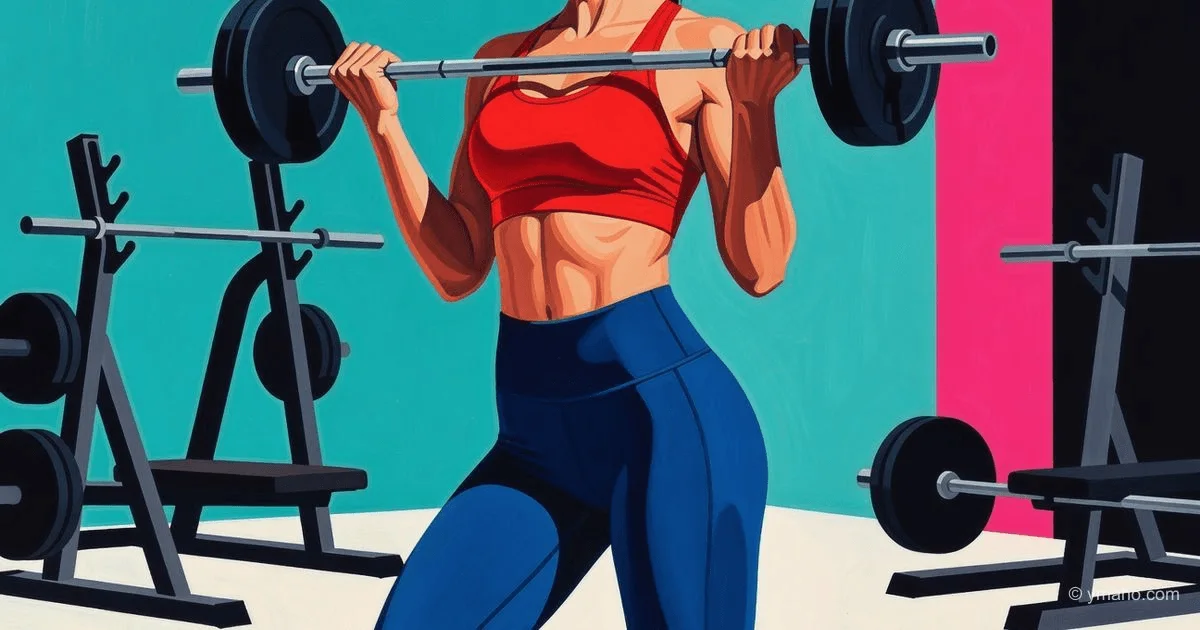
The 2000s Body Cult Returns to the US, But with a 'Strength Not Thinness' Twist
Harper's Bazaar analyzes the trend for washboard abs and glutes popular on TikTok in the US. Unlike the 2000s, the emphasis has shifted to strength and powerlifting, but the same principles of cutting through high-protein diets are used.
The Return of the 2000s Body Cult: Why 'Strength' Is the New 'Thinness' and GLP-1s Changed the Game Forever
I've been tracking fitness and wellness trends since 2018, and I have to say it straight: what Harper's Bazaar writes about in early June 2026 is not just a 'return of the 2000s body cult with a strength twist.' It's a tectonic shift in how we talk about women's bodies, diets, and exercise. On the surface—washboard abs, glutes, and high-protein diets. Beneath the surface—a quiet revolution driven by GLP-1 agonists (Ozempic, Wegovy, Zepbound) that have changed millions of women's relationship with training forever.
The journalists at Harper's Bazaar are right about one thing: the aesthetic ideal has indeed shifted. On TikTok, the hashtag #SkinnyTok is racking up billions of views for videos on achieving a 'model body.' But they're wrong when they say this is a return to the 2000s. Because in the 2000s, women starved themselves. In 2026, they lift iron and eat protein. Let's break down how GLP-1s, the science of muscle mass, and the new ethos of 'strength, not thinness' have woven together into a trend that will reshape the fitness industry for decades.
[The Core]: What's Really Happening
The phenomenon described by Harper's Bazaar is three parallel processes that have overlapped. First, fatigue with body positivity. Second, the craze for GLP-1 agonists. Third, a scientific rethinking of the role of muscle mass in longevity.
Let's start with GLP-1s. According to surveys, one in eight American adults has tried or is using these drugs. That's tens of millions of people. And they've all faced the same problem: rapid weight loss on these drugs comes with muscle loss. Muscle loss is the main side effect of GLP-1s that doctors now discuss with every patient. And the main antidote is strength training and a high-protein diet.
This created a perfect storm. A woman who once feared 'bulking up' like a man now realizes: if she doesn't lift heavy and eat enough protein, she won't become 'slim' but 'saggy.' A quote from SELF Magazine: 'The stereotype that women fear becoming “bulky” from strength training is effectively outdated.' Doctors tell their patients directly: 'Zepbound helped clear the mental space so you can focus on strength training.'
The second layer is the collapse of body positivity and the rise of body neutrality. Marie Claire in May 2026 wrote about the paradigm shift: we've stopped demanding that women love their 'imperfections.' Instead, the focus has shifted to how the body functions. This is perfect soil for the 'strength not thinness' trend. Strength is a function. You may be unhappy with cellulite, but you can't argue with the fact that you deadlift 50 kg. It's an objective metric. It doesn't depend on your mood or Instagram lighting.
The third layer is a reaction to #SkinnyTok. TikTok recently blocked this hashtag due to pressure from the European Commission. But as Norwegian media report, just change the spelling and algorithms will again show you extreme content about starvation. This has created a cultural divide: young girls (12-17) are still at risk for eating disorders (cases rose 50% from 2019 to 2023), while adult women (25-45) have switched to 'functional strength' as a healthier alternative. The Harper's Bazaar trend is about the second group.
Timeline and Context
The countdown of this trend can start in 2021, when the FDA approved Wegovy for weight loss. At the time, few understood that these drugs would change fitness culture. In 2024, the boom began: women flocked to doctors, got prescriptions, lost the first kilos—and discovered their glutes had flattened and their skin had sagged.
Key date: 2025. The Health & Fitness Association publishes data: dumbbell usage in US gyms rose 28% compared to 2021, barbell usage up 3.8%, kettlebells up 3.6%. GLP-1s accelerated a structural trend that was already emerging. People began to understand: weight loss without muscle preservation is a path to sarcopenia (muscle atrophy) in old age.
March 2026 is an important milestone. SELF magazine publishes a major piece, 'How GLP-1s Are Quietly Reshaping Gym Culture.' For the first time at the glossy level, the link is articulated: GLP-1 → muscle loss → strength training → high-protein diet → new body cult. In April, Dr. Robert Kushner (a renowned obesity expert from Northwestern University) in his keynote lecture lists the ripple effects of GLP-1s: restaurants reduce portions, grocery stores sell more protein, fitness clubs reconfigure their floors.
And now May-June 2026. Harper's Bazaar captures the trend toward the 'abs and glutes' aesthetic. But they're wrong when they say it's 'the same principles of cutting through high-protein diets.' No. These are different principles. In the 2000s, you ate little and ran. In 2026, you eat a lot of protein and lift heavy. The difference is colossal.
Who Wins and Who Loses
The biggest winner is the fitness industry, especially the strength equipment segment. Planet Fitness announced a partnership with telemedicine provider Ro, which sells GLP-1s. Equinox launched a 'GLP-1 research protocol' for its trainers. Life Time created the Miora clinic, where patients receive both drugs and personal training. Personal training sales rose 22% from 2024 to 2025. Strength gear (belts, wrist wraps, home dumbbells) is at the top of Amazon sales.
The second winner is the food industry in the high-protein segment. Sales of high-protein dairy products, protein bars, and frozen meals labeled 'GLP-1 Friendly' are growing. Sales of ultra-processed sweet and salty snacks, as well as sugary sodas, are falling. Restaurants are adapting menus: Manny's in Chicago offers half-sandwiches instead of standard giant portions.
The absolute losers are cardio brands and running equipment manufacturers. Gyms are removing treadmills and stationary bikes to make room for squat racks and dumbbell rows. Cardio is no longer king. Strength is the new king.
The second loser is the diet supplement industry for 'cutting' (thermogenics, fat burners). In the 2000s, women took these pills to speed up metabolism. In 2026, they drink protein to preserve muscle. The fat burner market is shrinking; the protein market is growing.
What the Media Isn't Saying
First, the most important insight that Harper's Bazaar and everyone reposting the news are silent about. The 'pursuit of strength' is an elitist trend for those with time and money. To lift weights correctly, you need a trainer (or at least a decent gym membership). To eat 100+ grams of protein a day, you need to buy expensive foods (steaks, fish, quality protein powder). A low-income woman working two jobs can't afford a trainer or a dietitian. She's left to starve—the good old 2000s way. But starvation is now considered 'wrong' and 'ineffective.' We've created a two-tier system: the rich lift iron, the poor starve. And we call it progress.
Second omission—ignoring the danger of excess protein. Vox in May 2025 published an excellent investigation: the protein requirement for muscle gain is 0.54-0.73 grams per pound of body weight (that's 92-124 grams for a 70 kg woman). But fitness influencers recommend 1 gram per pound (170 grams for the same woman). That's 50% more than needed. Excess protein strains the kidneys, causes constipation, and is just wasted money. But who will say this loudly when the entire protein industry feeds on this myth?
Third, the most cynical point. The 'strength not thinness' trend is a rebranding of diet culture, not its abolition. Yes, you're not starving. But you're still obsessed with how your body looks. You still count macros. You still spend hours in the gym. You just say 'I want to be strong' instead of 'I want to be thin.' The vocabulary changed, but the compulsive behavior hasn't. Psychologists are already sounding the alarm: orthorexia (obsession with healthy eating) and exercise bulimia (compulsive exercise) are rising among women who 'just want to be healthy.' We haven't cured eating disorders. We've just renamed them wellness.
Forecast: Next 30 Days and 90 Days
In 30 days (by July 2026). A wave of criticism of the trend will begin from dietitians and psychologists. The American Academy of Nutrition and Dietetics will issue a statement that 'protein mania' harms kidneys and the 'strength cult' alienates people with disabilities and chronic illnesses. Harper's Bazaar will publish a 'response' article acknowledging their piece was one-sided. But the trend is unstoppable.
Simultaneously, Equinox and Life Time will announce new programs: 'GLP-1 Maintenance'—group training specifically for people who have come off the drugs and are trying to maintain weight and muscle. Price: from $200 a month. And it will be in huge demand.
In 90 days (by September 2026). Activewear brands (Lululemon, Alo Yoga, Gymshark) will release special 'Strength Capsule' lines—clothing that accentuates muscles rather than hiding them. Open backs, tight leggings, bras that show off lats. This will be the direct opposite of the oversize aesthetic of the 2020s. And it will sell.
The most interesting thing will happen when data on the 'second peak' of eating disorders related to orthorexia appears in leading medical journals. By year-end, The Lancet or NEJM will publish a study showing that 15-20% of women actively following the 'strength not thinness' trend exhibit clinical signs of eating disorders and exercise addiction. But the fitness and wellness industry, which earns billions from this trend, will pretend not to notice.
And finally, as an analyst, I must say: the body cult won't disappear. It just mutates. First came thinness. Then fitness. Then body positivity. Then body neutrality. Now functional strength. Each iteration sells you a new product, a new diet, a new training program. And each time you believe 'this time it's different.' This time it's not. But marketers work well, and you'll buy a membership again. Me too.
— Editorial Team