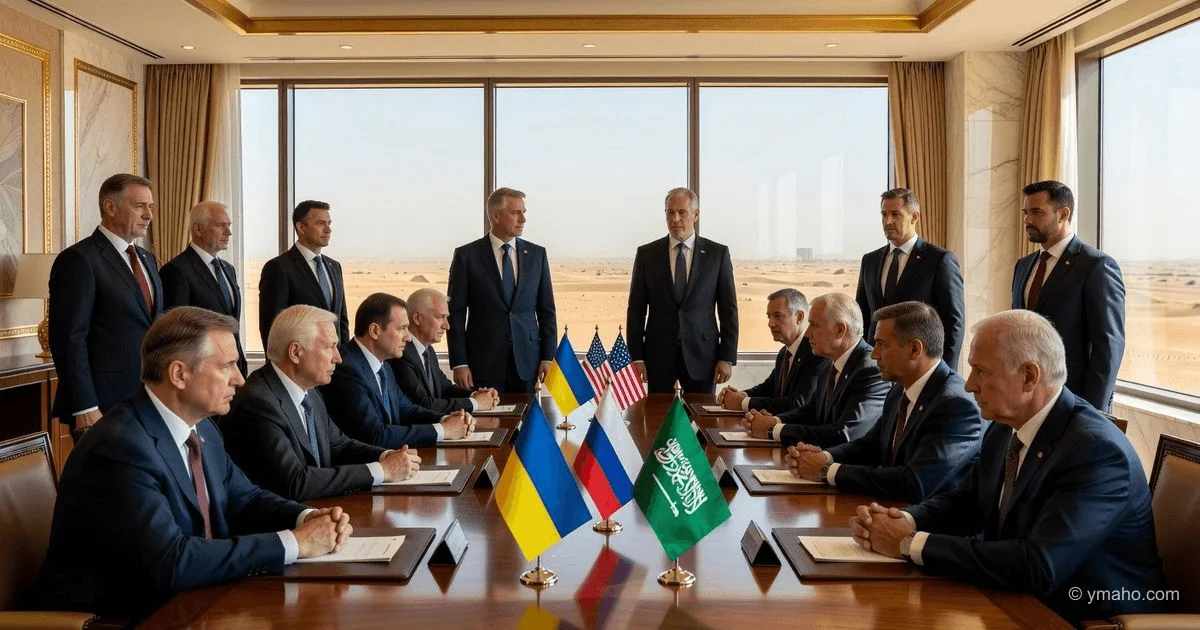
Ukraine and Russia Discuss Ceasefire Terms at Saudi Arabia Summit Mediated by the US
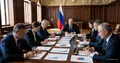
Ukrainian representatives met with Russian emissaries to discuss parameters for halting strikes on energy grids and reviving the grain deal, reports The Wall Street Journal.
Headline: The Saudi Summit and the Illusion of a Truce: Why Markets Don't Believe in a Ceasefire
Author: Independent Financial Analyst (Partner at a Macro Hedge Fund, Expertise: Geopolitical Risks and Commodity Markets)
When The Wall Street Journal writes about negotiations to halt strikes on energy grids and revive the grain deal, a superficial glance sees a glimmer of hope. European gas prices drop 5% in the first hour after publication, wheat futures adjust by 2-3%, and oil loses support from the geopolitical premium. Traders breathe a sigh of relief: "Peace is near."
This is a dangerous misconception. I have spent the last ten years analyzing negotiation processes in conflict zones, and I can say with certainty: the current round of talks in Saudi Arabia is not a path to peace but a tactical pause for both sides to regroup. Moreover, the very fact that information about "progress" leaks to major media outlets is part of an information war aimed at gauging market reactions and internal elites.
Let's break down why the euphoria is premature and which assets will actually benefit from this "illusion of a truce."
[The Core]: What's Really Happening
On the surface, representatives of Ukraine and Russia are meeting in Riyadh with US mediation. Two specific issues are being discussed: a halt to strikes on energy infrastructure (a mutual moratorium) and the revival of the "grain deal" in a new format. President Zelensky stated back in late March that he was ready for such a step: "If Russia is ready to stop strikes on Ukrainian energy, we will not retaliate against their energy."
But the reality is far more complex. The Russian side, through Foreign Minister Lavrov, has set a condition that makes the deal nearly impossible: "We need clear guarantees. And given the sad experience of agreements only with Kyiv, guarantees can only result from an order from Washington to Zelensky and his team to do this or that." Moscow demands that the US take responsibility for controlling Kyiv. This is not diplomacy; it's an attempt to shift responsibility and create an image of a "puppet" regime.
A non-obvious insight that most analysts miss: Ukraine has no incentive to stop strikes on Russian refineries. According to Bloomberg and confirmed by the head of the presidential office, Kyrylo Budanov, Western partners as early as April 2026 asked Kyiv to pause attacks on Russian oil infrastructure due to a spike in global prices amid the Persian Gulf conflict. But Kyiv ignored these requests. Why? Because strikes on refineries are the only real way to reduce Russia's revenue from petroleum product sales. From a military logic standpoint, stopping this mechanism now would weaken their own position. Zelensky directly stated: if Russia does not stop, Ukraine will continue.
Timeline and Context
The negotiation track for an energy truce has been ongoing since early 2026. As early as January 30, Zelensky declared readiness for a week-long halt to strikes on energy grids in response to a similar move by Russia. The proposal came from the Trump administration, but there was no response from the Kremlin. Moreover, immediately after these statements, Russia intensified attacks on Ukraine's energy system.
In February 2026, talks were held in Abu Dhabi discussing the same "energy track," but without results. In March, a new round in Saudi Arabia, again without breakthroughs. And now, in June 2026, another attempt, this time with specific proposals for a "Grain Deal 2.0."
The key difference in the current round is Saudi Arabia's role as a venue. This is no coincidence. Riyadh, which just refused normalization with Israel, is trying to reclaim its role as a global peacemaker. For Crown Prince Mohammed bin Salman, successful mediation between Russia and Ukraine is a way to restore his reputation after the Khashoggi murder and demonstrate independence from the US.
Regarding the grain deal: Russia agrees to return to it, but on new terms. Moscow demands that its own grain and fertilizer exports face no sanctions barriers (issues with payments, logistics, insurance). Additionally, Russia wants to resume ammonia exports through Ukrainian territory and reconnect Rosselkhozbank to SWIFT. These are absolute "red lines" for the US and Europe.
Who Wins and Who Loses
Winners:
- Saudi Arabia and the UAE (geopolitical capital). By acting as mediators, they gain leverage over both Moscow and Washington. In a world where the US is losing its role as the sole arbiter, Riyadh and Abu Dhabi become indispensable. This will strengthen their positions in OPEC+ and allow them to dictate terms in the energy market.
- Short positions on natural gas (Henry Hub, TTF). Every round of talks—even fruitless ones—creates volatility. Skilled traders profit from news: they sell gas on rallies during escalation and buy on dips when headlines about "progress" appear. The current round has already dropped TTF by 4-6%.
- Global agri-traders (Cargill, Bunge, Archer Daniels Midland). Reviving the grain deal will reduce risks of supply disruptions from the Black Sea. Even rumors of talks have stabilized wheat and corn futures, allowing traders to hedge positions at more favorable prices.
Losers:
- Russian oil companies (Rosneft, Lukoil). If a truce takes effect even for a month, Ukraine will stop attacks on refineries. But this also means the US and Europe could resume pressure on the "shadow fleet" and oil flows. Additionally, a ceasefire would lower global oil prices (the "war premium" disappears), hitting Russia's budget. A bearish scenario for Russian exports.
- War risk insurers (Lloyd's, major reinsurers). The grain deal means commercial vessels return to the Black Sea, reducing demand for expensive war insurance. This is positive for global trade but negative for those who profited from ultra-high premiums over the past two years.
- European "alternative" logistics corridors (ports in Romania, Bulgaria, railway operators in Poland). During the Black Sea blockade, all Ukrainian agricultural products went through "solidarity corridors"—via the Danube, by rail through Poland. Returning to sea transport (which is 2-3 times cheaper) will deprive these intermediaries of super-profits. Shares of Bulgarian and Romanian port operators will fall.
What the Media Isn't Saying
The most important omission is "negotiation fatigue" and how markets react to it. Look at the timeline: talks have been ongoing since January 2026. Each time—a surge of hope, each time—a failure. Markets are starting to adapt: the reaction to news about talks is getting weaker. If in January-February gas dropped 10-12% on initial reports of progress, now it's only 3-5%. This is a sign that traders have stopped believing in a political solution.
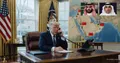
The second point is Trump's position. The US administration is pressuring both sides but is clearly not ready for tough guarantees. Lavrov directly stated that "only Washington can achieve positive results in stopping shelling of civilian and energy infrastructure." This is an attempt to shift blame for failure onto the US. If Trump does not provide these guarantees (and he won't, because he doesn't want to get entangled in a new conflict of commitments), the talks will collapse, and the Americans will be left blamed.
Finally, about territories. No media outlet mentions that the "energy truce" is discussed separately from territorial concessions, but in reality, they are linked. Russia, according to Bloomberg, is ready to sign a peace memorandum only if Ukraine agrees to withdraw troops from the Donetsk region. Without that, no progress. Kyiv will not agree to this. Therefore, any "energy" agreements are merely a palliative that does not resolve the main conflict but creates an illusion of forward movement.
Forecast: Next 30 Days and 90 Days
30 Days (June – Early July 2026):
The probability of signing even a "limited" energy truce I estimate at no more than 25-30%. Too many contradictions. Russia demands guarantees from the US; Ukraine does not want to lose its trump card of strikes on refineries. Most likely, talks will drag on, "trial" steps will be taken (prisoner exchanges, humanitarian corridors), but no systemic agreement will be reached. Gas in Europe will remain in the range of $450-550 per thousand cubic meters, Brent oil at $90-105. The ruble will remain under pressure (80-85 per dollar) as the prospect of peace recedes.
Shares of European defense companies (Rheinmetall, BAE Systems) will continue to rise, as the prospect of a truce does not eliminate the need to increase military budgets.
90 Days (September 2026):
The key moment is the US presidential election (November 2026). Trump needs a victory on the foreign policy front. If by September the talks have not moved from a deadlock, Washington may sharply tighten sanctions against Russia (secondary sanctions on Chinese banks, a full ban on oil trade above the price cap). This will trigger a new round of escalation. Alternatively, Trump may make forced concessions (easing sanctions in exchange for freezing the front). The second scenario—the "Korean option"—is unlikely, but if it materializes, oil could fall to $70-75, gold to $4000, and the ruble strengthen to 60-65 per dollar. Prepare for high volatility in August-September.
Editorial Forecast
Asset: TTF Natural Gas Futures (European Gas).
Direction: Decline in the next 48 hours, then a rebound.
Key Levels: Current level around €48 per MWh. I expect a test of €45-46 on news of "progress" in talks, then a return to €50-52 when it becomes clear the deal has fallen through. Resistance at €55.
Confidence Level: Medium (60%).
Main Risk: A sudden signing of a full ceasefire agreement (probability less than 15%) could crash TTF to €35-38 per MWh within a day. Watch statements from Lavrov and Trump's national security advisor in the next 72 hours.
— Editorial Team