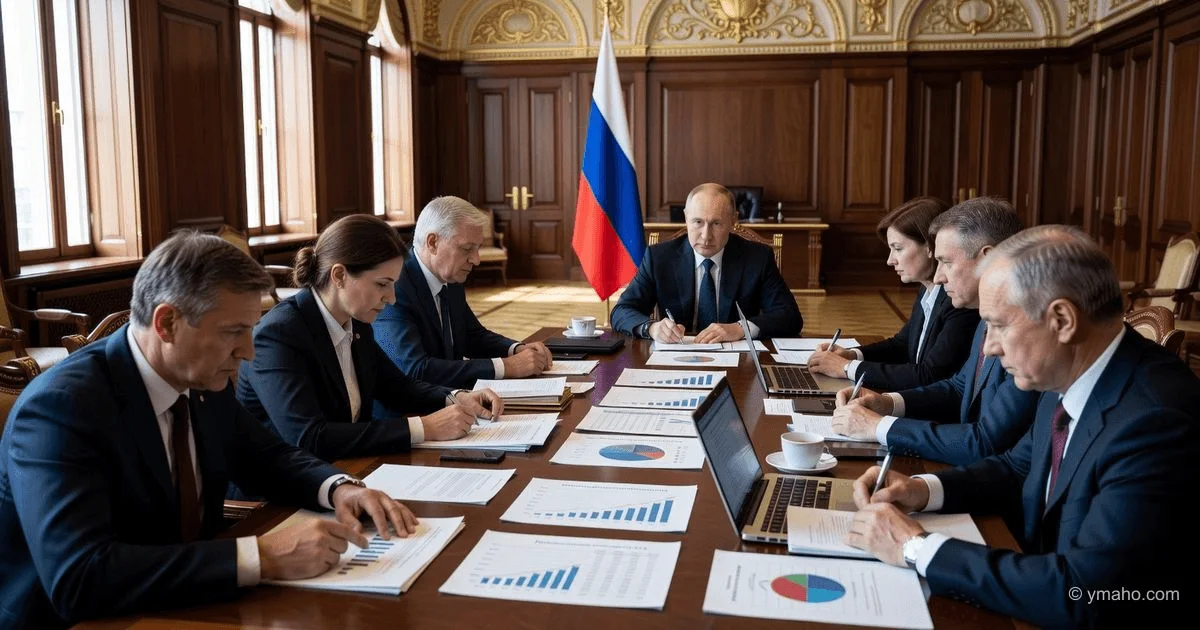
Bloomberg: Putin's Advisors Warned Him of Unsustainable War Costs with Ukraine
Senior officials told the Russian president that the current pace of war spending is unsustainable, pointing to serious internal divisions in the Kremlin.
The Kremlin on an Economic Needle: Why the Warning to Putin About Unsustainable Spending Is a Signal for Markets, Not Politicians
Author: Independent Financial Analyst (former macro hedge fund manager, specializing in emerging markets and sovereign debt)
When Bloomberg publishes news that Russia's top financial officials—the Ministry of Finance and the Central Bank—have warned Putin about the unsustainability of current military spending, a superficial view sees only another confirmation of "internal divisions." Traders sigh and shift positions from the ruble to the dollar.
That's a mistake. I've worked with sovereign debt of countries in a "war economy" state and know: when the financial bloc goes to the supreme commander with such a warning, it's not just "advice." It's a final warning before the mechanism starts breaking publicly. It's not about whether Russia can finance the war tomorrow. It's about the fact that its budget deficit for the first four months of 2026 has already reached 5.9 trillion rubles—one and a half times the annual plan.
Let's break down why this "Kremlin conversation" matters for global portfolio managers, even if you don't hold rubles.
[The Essence]: What's Really Happening
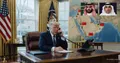
The news that swept global media on May 31–June 1, 2026, boils down to this: behind closed doors, the Ministry of Finance and the Central Bank of the Russian Federation told Putin that the current level of defense spending is leading to a dangerous expansion of the budget deficit. Officials proposed cutting the military budget. Putin's response was unequivocal: find savings elsewhere, don't touch defense.
But the essence is deeper. The 2026 budget was drafted with two fatal assumptions. First, officials sincerely hoped that after Putin's meeting with Trump in Alaska in August 2025, there would be a détente, allowing military spending to be cut in the second half of 2026. That didn't happen. Second, they expected the war to end by year-end.
Now these assumptions have shattered against reality. And here's the non-obvious insight that most analysts miss: Putin cannot cut military spending even if he wants to, because the Russian economy has become a hostage of the military-industrial complex. Cutting defense orders now would collapse tens of thousands of related enterprises, creating a social explosion in single-industry towns. Putin is trapped by his own success in militarizing GDP. It's not "unwillingness" to compromise; it's "impossibility" to stop without losing power.
Timeline and Context
The history of this conflict began not in May 2026, but in February, when Finance Minister Anton Siluanov sent an alarming letter demanding a freeze on non-military spending for 2026 by 2.9 trillion rubles, and for 2027–2028 by astronomical 5.4 and 7.1 trillion rubles respectively. That was a "warning." Now, three months later, the "warning" has turned into an "SOS signal."
Key date: May 27, 2026, when Siluanov gave an interview to Kommersant, publicly admitting: "Reserves are not infinite. Weakness in finances is unacceptable." For a finance minister, a public admission of limited resources is the equivalent of an air raid siren for the market. Usually they stay silent and look for money quietly. If Siluanov speaks out loud, the situation is on the brink.
Add the numbers. In the first four months of 2026, the budget deficit reached 2.5% of GDP (5.9 trillion rubles)—the highest level since the start of the full-scale war. Meanwhile, the Ministry of Economic Development has already cut its GDP growth forecast for 2026 to a paltry 0.4% from 1.3%, and in the first quarter, the economy contracted for the first time in three years—by 0.2%.
And this is with Urals oil prices around $95–100 per barrel due to the Middle East conflict. So even the oil shock isn't saving the day. According to Bloomberg sources, for a significant improvement, oil needs to stay above $100 for at least a year. Given the fragility of the Middle East truce, no one can guarantee that.
Who Wins and Who Loses
Winners:
- Global hedge funds shorting the ruble (USD/RUB). The Russian currency, which the Central Bank of the Russian Federation holds in the range of 75–80 per dollar by selling currency from reserves, will inevitably weaken as reserves start to melt faster. I expect the ruble to slide to 85–90 in the coming months, even with expensive oil. A structural budget deficit is a bearish case for any currency.
- Chinese machine tool and equipment manufacturers. Russia is forced to ramp up domestic weapons production, but its own machine tool sector is destroyed by sanctions. Purchases of Chinese dual-use machining centers go through "gray" schemes in Kazakhstan and Armenia. These flows will intensify as domestic factories need modernization.
- "Shadow" oil traders from the UAE and Turkey. When the Russian budget faces a deficit, the Kremlin pressures oil companies to sell more foreign currency earnings at an undervalued rate. This creates arbitrage between the official Central Bank rate and the real market rate on the black market in Dubai. A 5–7% difference means billions of dollars in revenue for intermediaries.
Losers:
- European businesses still operating in Russia (Unilever, Nestle, Raiffeisen Bank). Pressure on them will increase. The Kremlin, seeking money, will squeeze "voluntary contributions" from big business. Recall that in 2023, such a "voluntary" collection brought 300 billion rubles to the budget. Now, as of late May, 225 billion rubles have already been collected, with an annual target of 300 billion. But a deficit of 5.9 trillion cannot be closed with these "pennies."
- Russian systemically important banks (Sberbank, VTB). They are forced to lend to the military-industrial complex at inflated rates (the Central Bank's key rate is 14.5% and unlikely to decrease further), while simultaneously receiving non-repayable loans from bankrupt civilian enterprises. Corporate debt overdue has already exceeded 8 trillion rubles. Bank balance sheets are cracking.
- Ordinary Russians (inflation tax). Despite official inflation around 5.5%, the real price increase on imported goods (Chinese cars, electronics) due to ruble weakness hits wallets. That's why the Central Bank cannot cut rates—it would instantly spin the inflation spiral into double digits. The population pays for the budget deficit through high loan rates.
What the Media Leaves Out
The most important omission in the news is the role of the National Welfare Fund (NWF). As of late April, the NWF had shrunk by 60% compared to pre-war levels. This is not just a "safety cushion." It's the Kremlin's last trump card for stabilizing the situation before elections or a crisis. When the NWF runs out—and at current spending rates, that's a matter of 12–18 months—the government will have only two options: the printing press (hyperinflation) or budget sequestration (social explosion).
The second point is the oil damping mechanism. Due to the reverse excise mechanism, most of the windfall from high oil prices goes not to the budget but stays with oil companies. As I wrote in my April analysis, the Russian budget received only an additional 21 billion rubles from high prices in April, while oil companies earned hundreds of billions. Putin now faces a tough choice: force oil companies to share (risking their loyalty) or continue patching holes with the NWF.
Finally, geopolitics. Bloomberg writes that the meetings took place both before and after the start of the US-Israel war with Iran. This means hopes for a "saving" spike in oil prices to $120 have not materialized. The Russian economy finds itself in a "golden mean": prices are high, but not enough to close the deficit; sanctions bite, but not enough to cause collapse. This is the worst state—slow strangulation, where structural problems accumulate and political will to solve them is absent.
Forecast: Next 30 Days and 90 Days
30 days (June–early July 2026):
I expect no public collapse. Putin will use the pressure apparatus to "smooth out" the budget by July. Likely, mineral extraction taxes (MET) for oil companies will be raised, and "voluntary" business contributions will be increased to 500 billion rubles. The ruble will continue trading in the 75–80 range against the dollar, but with higher volatility. Russian company stocks (MOEX index) will continue to fall relative to dollar counterparts as foreign investors withdraw capital through "friendly" yuan mechanisms.
90 days (September 2026):
The key moment is the adoption of the 2027 budget. If military spending is not cut and the deficit remains at 2–3% of GDP, markets will see that Russia is entering a phase of "permanent war budget." This would mean the Central Bank rate stays double-digit for years, civilian sector investments vanish, and the NWF is completely exhausted by end of 2027. For global markets, this means Russia's default risk on external obligations (even if blocked) will rise to 30–40%, negatively impacting all emerging markets as investors begin to reassess sovereign risks by analogy.
Editorial Forecast
Asset: Russian ruble (USD/RUB).
Direction: Weakening (rise in USD/RUB pair).
Key levels: Current level ~75–77 rubles per dollar. I expect testing of the 82–84 ruble level within 72 hours. Support at 78 rubles. If 85 rubles breaks, accelerated move to 90 is possible.
Confidence level: Medium (60%).
Main risk: The main risk is sudden announcements of progress in Ukraine negotiations or tightening requirements for exporters to sell foreign currency earnings. Any news of forced peace would crash the dollar to 65–68 rubles overnight, as the market would price in economic demobilization and falling military spending. Watch for information leaks from Ankara (negotiation mediators).
— Editorial Team