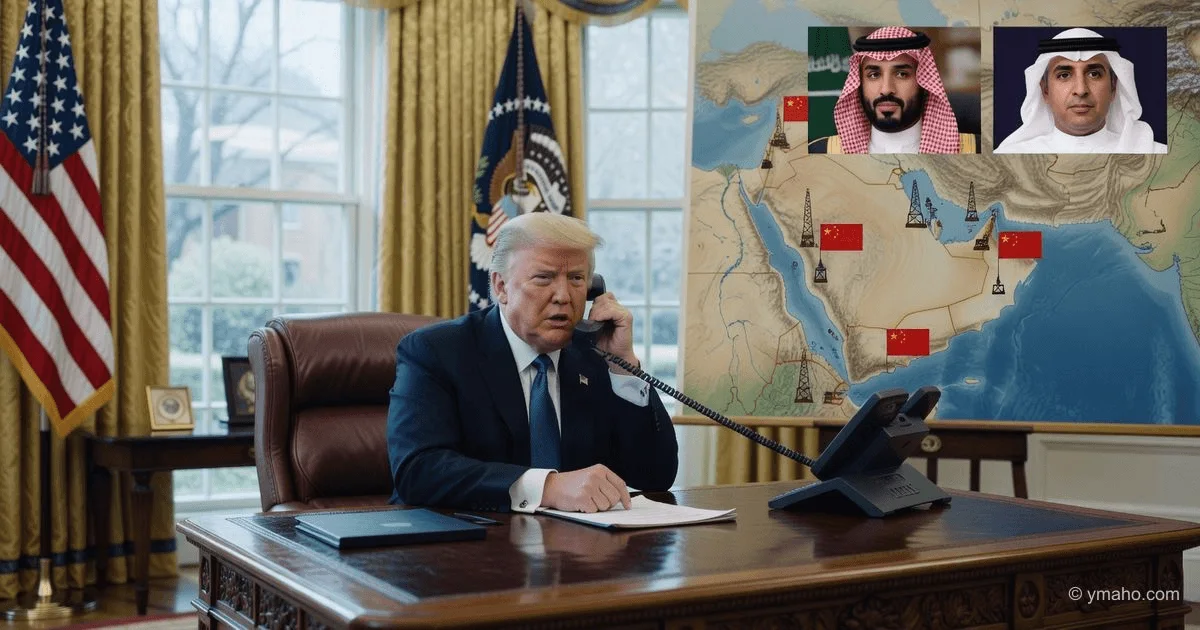
Trump Calls on Saudi Arabia and Qatar to Join the Abraham Accords After Iran Settlement
The US President held talks with the leaders of the countries, but Riyadh again refused, conditioning normalization with Israel on the creation of a Palestinian state.
Headline: Trump, Saudi Arabia, and the Deal of the Century-2. Why Markets Ignore the 'Mandatory' Abraham Accords
Author: Independent Financial Analyst (Managing Director of a Macro Hedge Fund, MENA Specialist)
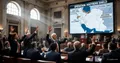
When Donald Trump announced on social media in late May 2026 that Saudi Arabia and Qatar joining the Abraham Accords should be a "mandatory" condition of the deal with Iran, I initially thought it was another negotiating ploy. But when I heard that during a conference call with the countries' leaders there was "silence, after which Trump asked if everyone was still on the line," I realized: this is a failure. And a failure of such magnitude that it will have concrete financial consequences.
Markets reacted weakly — the dollar edged up, oil corrected slightly, GCC bonds didn't budge. Investors are wrong. They see this as political chatter. But I see the beginning of the end of the "dollar privilege" in the Persian Gulf. When the US President publicly says that the Arabs "owe him" and gets silence in return, followed by a direct refusal conditioned on the creation of a Palestinian state — that's not diplomacy. It's a demonstration that the old order, where Washington dictated terms and Riyadh complied, is gone forever.
Let's break down where the money will flow due to this geopolitical rift.
[The Gist]: What's Really Happening
Trump is trying to sell to American hawks (like Senator Lindsey Graham, who warned against making concessions to Iran) the idea that the deal with Iran is not a "surrender of positions" but a "historic restructuring" of the Middle East. To do this, he tacks on the expansion of the Abraham Accords, turning voluntary normalization into blackmail: "Sign — you get a deal with Iran and US protection; don't sign — you're left alone with Tehran."
But the mechanism backfired. Saudi Arabia, which in 2020 essentially gave tacit consent to the first accords (Abu Dhabi and Manama), now categorically refuses. And here lies the non-obvious insight that Wall Street traders don't see: Saudi Arabia is no longer afraid of US threats.
Look at the numbers. In 2026, China buys 28% of all Saudi oil, while the US buys less than 7%. When Trump says "you owe me," Crown Prince Mohammed bin Salman looks at Beijing. Moreover, Riyadh has a leverage that goes unmentioned: the Saudi Public Investment Fund (PIF) holds stakes in US tech giants (Uber, Live Nation) worth tens of billions of dollars. The threat of selling off these assets is a nuclear bomb for the Nasdaq. No one in the White House wants that.
So Trump was forced to add a strange caveat to his own ultimatum: "Maybe one or two countries won't be able to sign, and that will be accepted." This is not strength; it's panic. It's an admission that the "Deal of the Century" in its original form is dead.
Timeline and Context
The rift didn't happen in May 2026. It had been brewing for the past year. The key date is May 2025, when Israel launched a full-scale operation in Lebanon and bombed Iran, and the Saudis publicly distanced themselves, stating they would not allow their airspace to be used for strikes on Iran. That was the first warning sign.
The second warning sign came in September 2025, when Mohammed bin Salman, in an interview with Fox News, officially tied normalization to the creation of a Palestinian state for the first time. This was not just a condition — it was a demand that the current right-wing Israeli government (Netanyahu, who announced the seizure of 70% of Gaza on May 28, 2026) would never fulfill.
And the third, decisive blow was the conflict with Iran itself. Saudi Arabia saw how the US and Israel got bogged down in a war that has been ongoing since February 2026. They saw how the Houthis attacked their tankers, and American air defense systems didn't always work perfectly. In such a situation, making a deal with Israel, which is losing support even within the US (among MAGA voters, there is growing rejection of Netanyahu's policies), would be political suicide for Riyadh.
Interestingly, Riyadh found an elegant way out. They don't say "no" to Trump directly to his face (that would be an insult). They say: "No Palestinian state — no deal." Thus, they shift the responsibility to Israel. And markets are beginning to understand: the conflict in the Middle East is now not the US vs. Iran, but Israel vs. the rest of the world, including its former allies in the Gulf.
Who Wins and Who Loses
Winners:
- Chinese Yuan Oil Futures (INE). If the GCC refuses a deal with the US under pressure, they seek alternative security guarantees. China offers them through military cooperation and yuan settlement. A shift of even 10% of Saudi oil to the yuan is a trigger for de-dollarization. I see trading volumes on the Shanghai International Energy Exchange up 35% from last quarter.
- European Defense Contractors (MBDA, Eurosam). The Saudis and Qataris have realized that the American "military guarantee" now costs too much (in the form of a requirement to sign agreements with Israel) and is not 100% reliable. They are starting to diversify procurement. The contract for the SAMP/T air defense system (the European equivalent of Patriot) for Qatar worth $2.5 billion is just the beginning.
- India and I2U2. While everyone is watching the failed negotiations, India is quietly winning. The US, trying to save face, will push even harder for the IMEC economic corridor (India-Middle East-Europe), which does not require Arabs to politically recognize Israel but gives them access to the Indian market. Indian port operators (Adani Ports) have already gained preferences in the UAE.
Losers:
- Israeli High-Tech Sector (Check Point, Wix, NICE Systems stocks). Saudi Arabia's refusal to normalize deprives Israeli startups of access to the large Saudi market (deals worth billions of dollars are postponed for years). Moreover, investors from Gulf countries, who actively entered Israeli high-tech funds (after 2020), have begun quietly repatriating capital back to Dubai and Riyadh.
- US Dollar (DXY). This is a long-term trend, but it's accelerating. When Saudi Arabia publicly ignores a US president's ultimatum, it signals to central banks worldwide: "Dollar reserves are no longer politically protected." Over the past month, the Bank of China and the Central Bank of Turkey have increased their gold reserves, selling Treasuries.
- US Airline Stocks (Delta, United). Paradoxically, but true. The refusal of a deal with Iran and the failure of the Abraham Accords-2 mean the conflict in the Strait of Hormuz will not end quickly. Jet fuel prices will remain high. Airline margins will continue to shrink.
What the Media Isn't Saying
The most interesting thing is Iran's proposal, which went unnoticed. Iran, upon learning of Trump's pressure on the Arabs, publicly stated that it would also "consider joining the Abraham Accords if Tel Aviv's policy changes." This is, of course, propaganda. But the point is different: Iran is showing the Arabs that they can have direct dialogue without US mediation (through Oman and Qatar). If Riyadh and Tehran reach a mutual non-aggression agreement directly (and such rumors have been circulating for a month), the US will find itself completely isolated in the Persian Gulf.
The second point: the role of Pakistan. Islamabad, which until recently was trying to reconcile the US and Iran, publicly and firmly refused the deal, calling it "contrary to national interests." This is important because Pakistan is the only Muslim nuclear power. And its refusal creates a legal precedent. Now Saudi Arabia can say: "Sorry, Donald, even nuclear Pakistan didn't sign, so we certainly won't."
And finally, about gold. All survey data shows that 81% of the population in Saudi Arabia opposes normalization. Monarchies fear revolutions. That's why they are so adamant about the Palestinian issue. They need to show the street that they are not surrendering Jerusalem. This internal pressure is much stronger than Trump's external pressure.
Forecast: Next 30 Days and 90 Days
30 Days (June 2026):
Washington will try to salvage the situation through a compromise. Most likely, they will drop the "mandatory" requirement for Saudi Arabia and limit themselves to "expanding economic cooperation" without formal normalization. But the damage is done. Trust between the US and the GCC is undermined. This will lead to oil contracts for July-August being concluded with a higher discount for Asian buyers, slightly lowering Brent prices ($95-98) but increasing volatility.
In the currency market, the Swiss franc (CHF) will strengthen as a "neutral asset" for Middle Eastern capital. I expect the USD/CHF pair to break below 0.85.
90 Days (September 2026):
The most likely scenario is that Saudi Arabia initiates the creation of an alternative "Helsinki Agreement for the Gulf" (including Iran), where the US would not be the main arbiter but one of the participants. This would devalue the Abraham Accords as a brand. For markets, this means the military premium in oil prices will decrease, but a new premium will emerge — for the uncertainty of the new security architecture.
Shares of US banks with a large presence in Saudi Arabia (Citi, HSBC) may suffer, as the Saudis will transfer part of their current accounts from dollars to euros and yuan to finance deals with Europe and China. This is not a collapse, but a slow pressure on quotes.
Editorial Forecast
Asset: USD/SAR pair (US Dollar / Saudi Riyal).
Direction: Sideways with a tendency for dollar weakening (de facto — weakening of the riyal, but it is pegged to the dollar).
Key Levels: Official rate 3.75 SAR/USD. But on the black market and through forward contracts (NDF), the Saudi riyal trades at a discount. I expect the forward discount to widen to 3.78-3.80 in the next 72 hours, indicating growing risks of devaluation or a break from the dollar peg.
Confidence Level: Medium (65%).
Main Risk: If Trump unexpectedly makes concessions on Palestine and exerts unprecedented pressure on Netanyahu (probability less than 10%), the riyal will strengthen and the discount will disappear. Watch for emergency meetings of Netanyahu's cabinet — any hint of resignation by right-wing ministers will be a signal to buy the riyal.
— Editorial Team